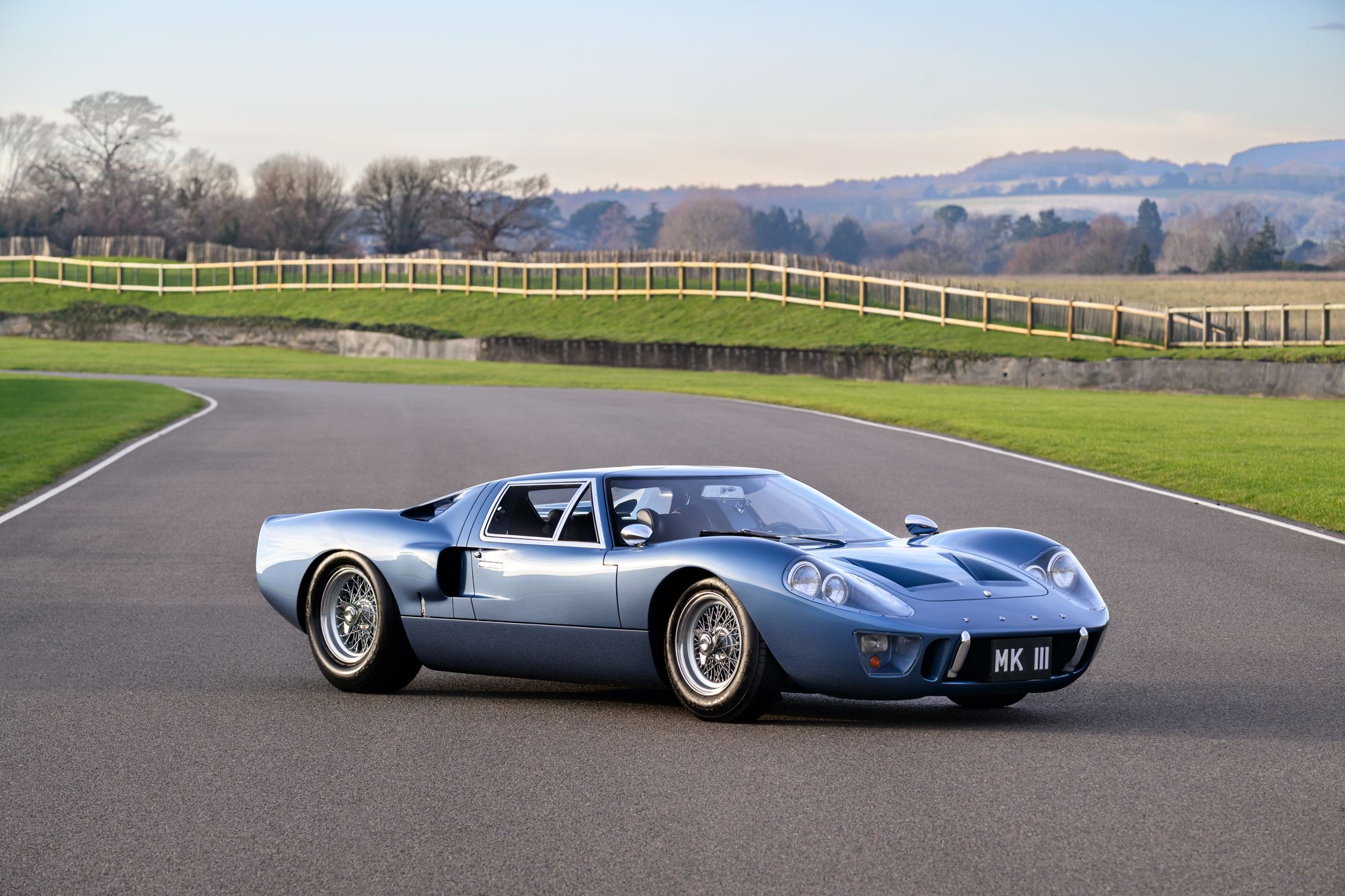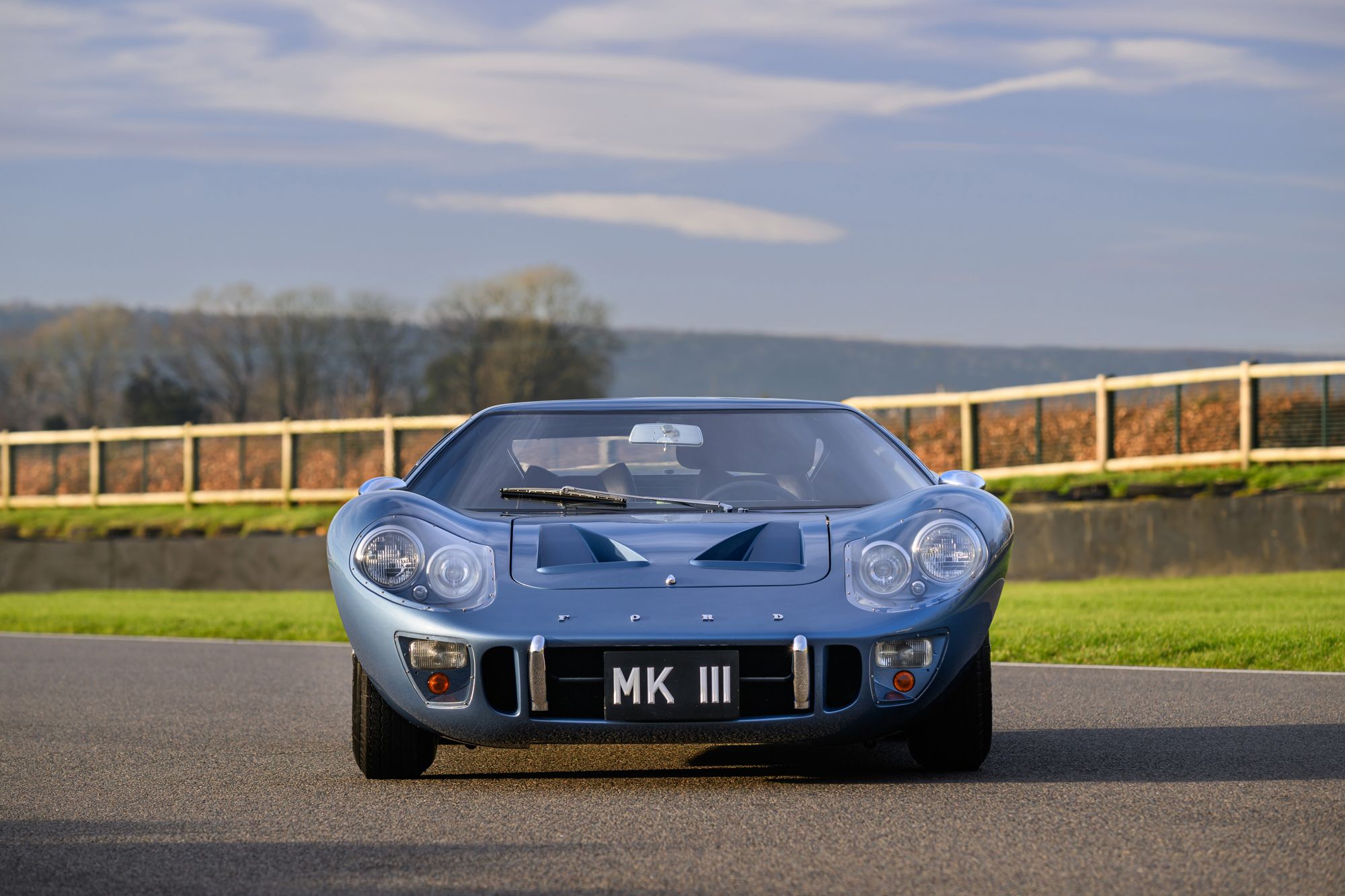
1966 Ford GT40 MK III Prototype
The Ford GT40 debuted in 1964 with the first generation referred to as the MK I. Since the early 1960s, Henry Ford II had wanted a Ford to race at Le Mans. When a deal to takeover of Ferrari fell through, the GT40 was developed with the unilateral goal of beating Ferrari at Le Mans. The MK I’s initial attempt at Le Mans was short lived, with all three entries retiring, although the Ginther/Gregory car led the field for a section of the race. The lessons learned from the 1964 and 1965 seasons allowed for the 7-litre MK IIs to dominate, achieving a 1,2,3 win at Daytona and finally realising Fords dream with the marque’s first win at Le Mans in 1966. 31 MK I GT40s had been built at the Slough factory and fitted with “road” trim, but Ford saw the potential for a purpose-built GT40 road car.
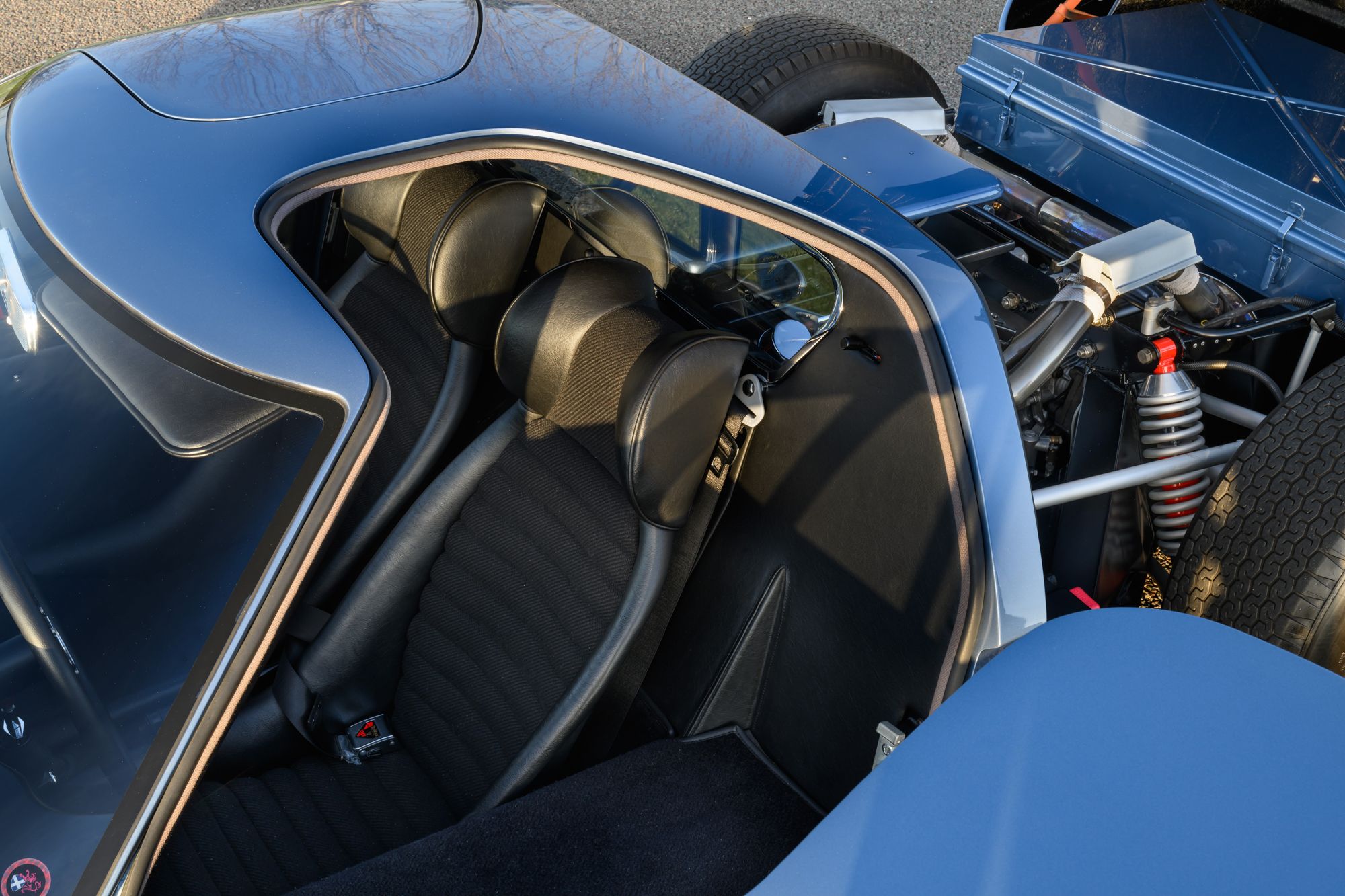
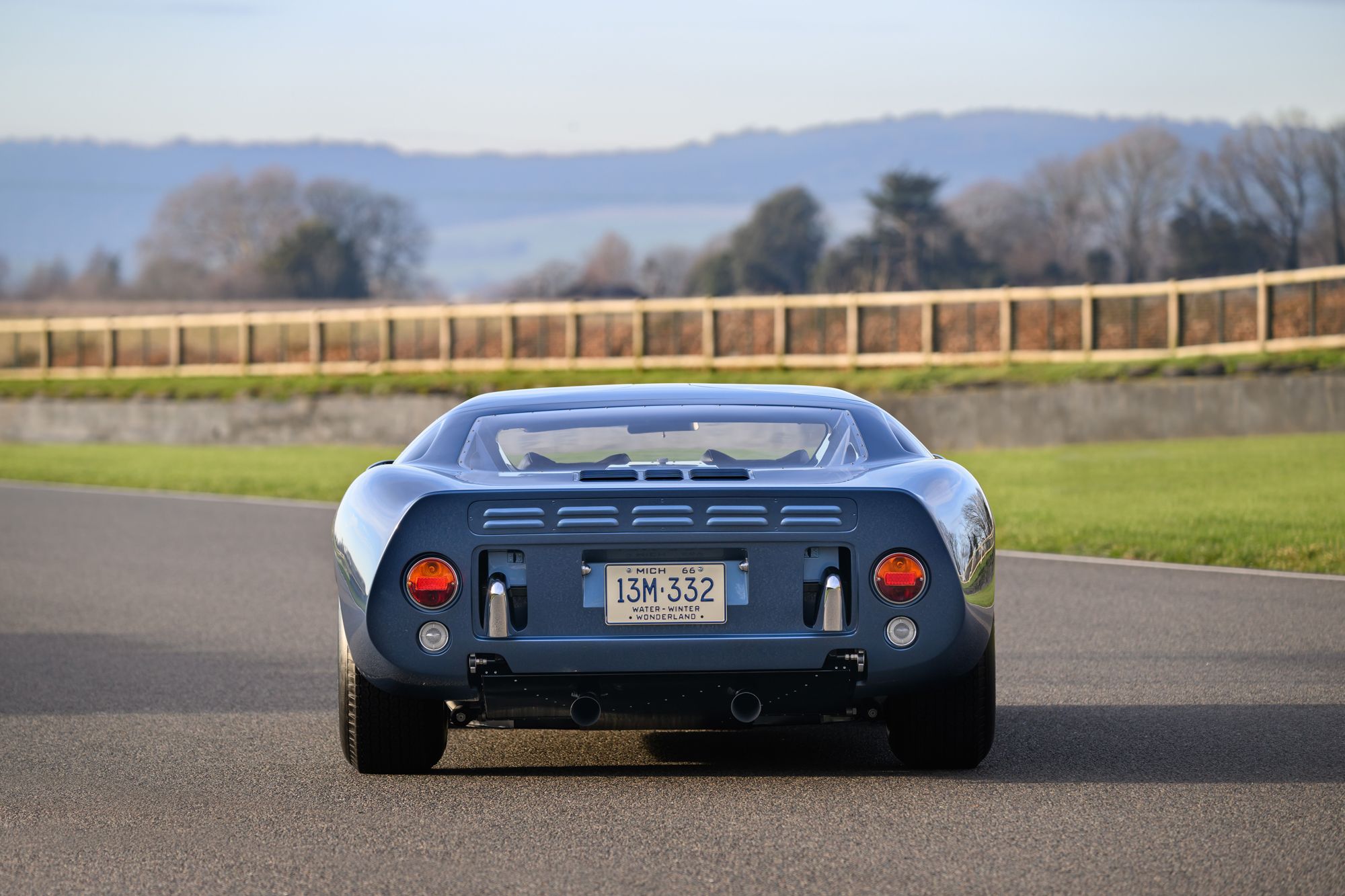
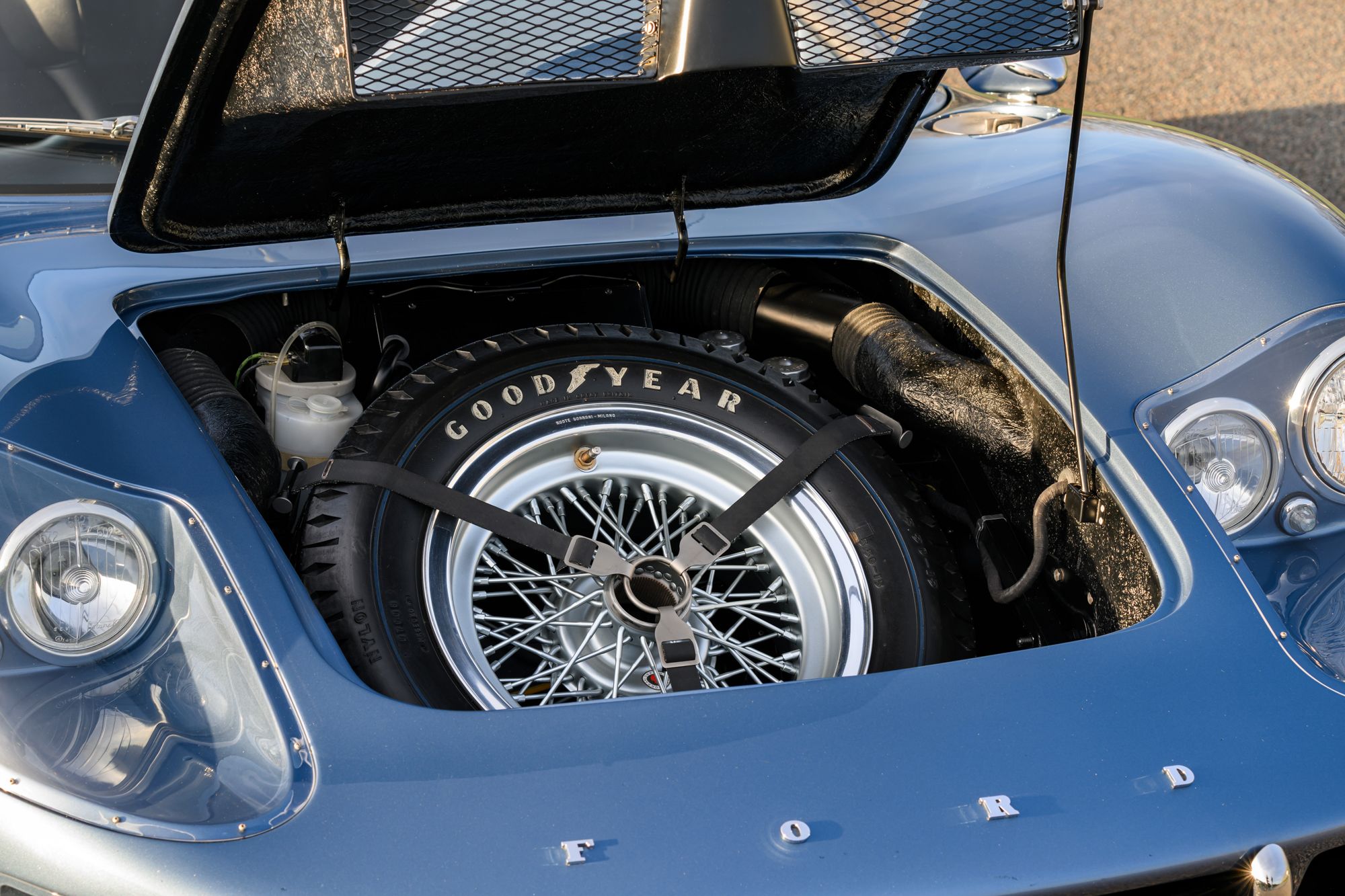
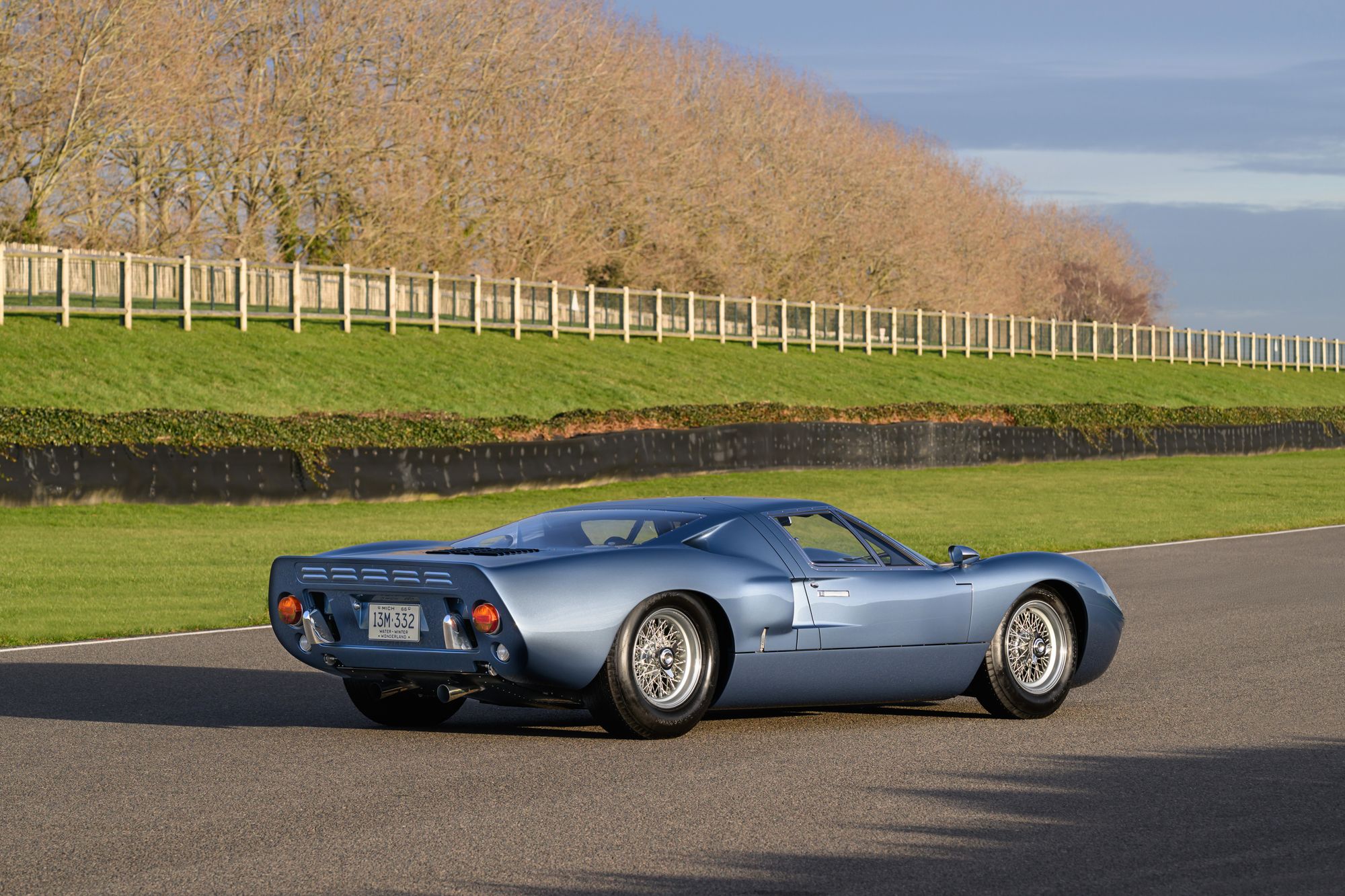
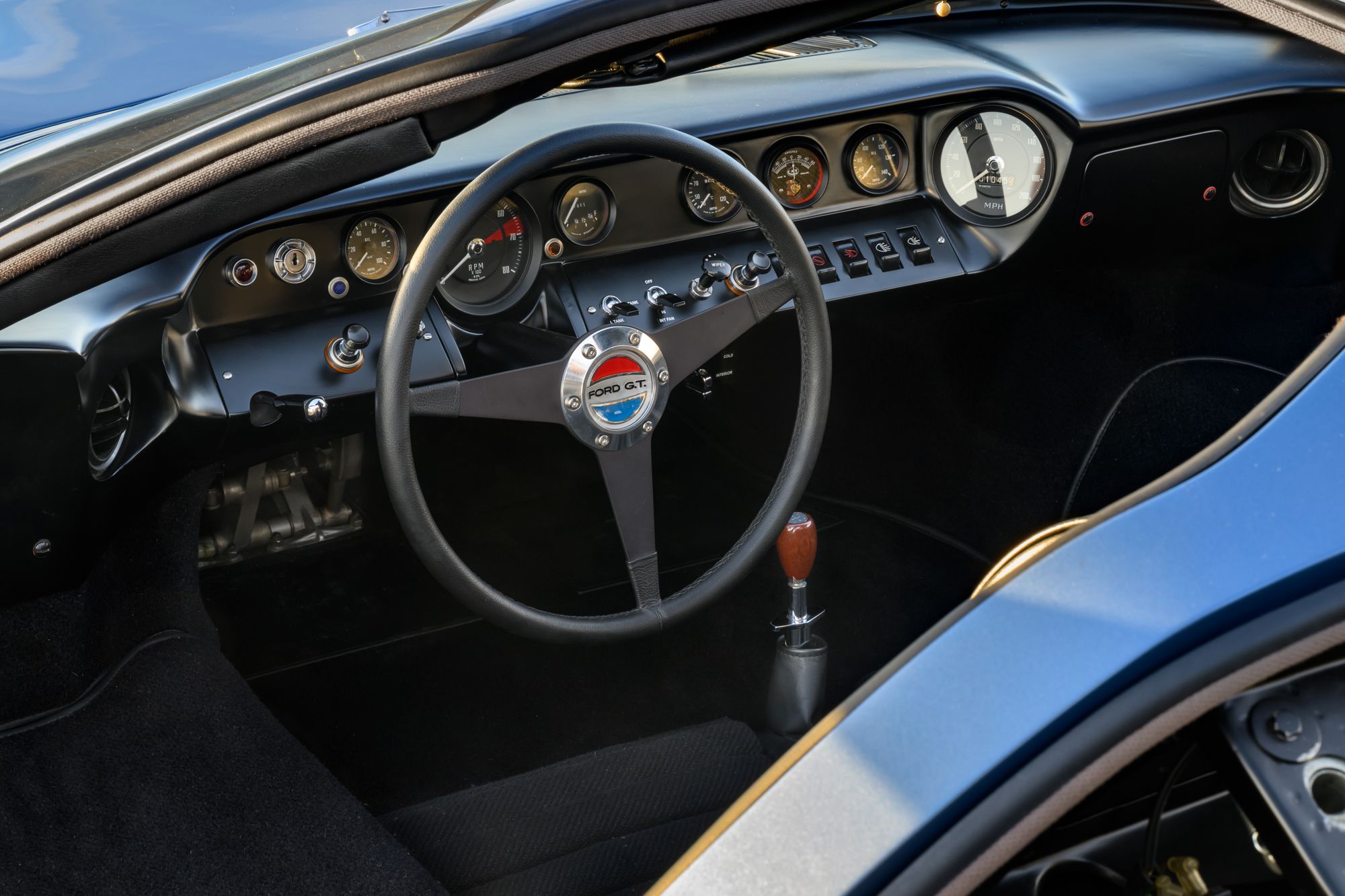
Initially planned for a 20-car run, the MK III was launched off of the back of, and with the momentum from the 1966 win, promising Ford’s wealthiest customers a Le Mans car they could daily. The MK IIIs were built to US road legal standard and featured four high sitting headlamps, an extended rear with luggage room, softer shock absorbers, a centre mounted shift lever and importantly, an ashtray. With an eyewatering price of $18,000 aimed at only the very top of Ford’s customers, it is no wonder the production run was eventually reduced to seven making it Ford’s rarest production car ever.
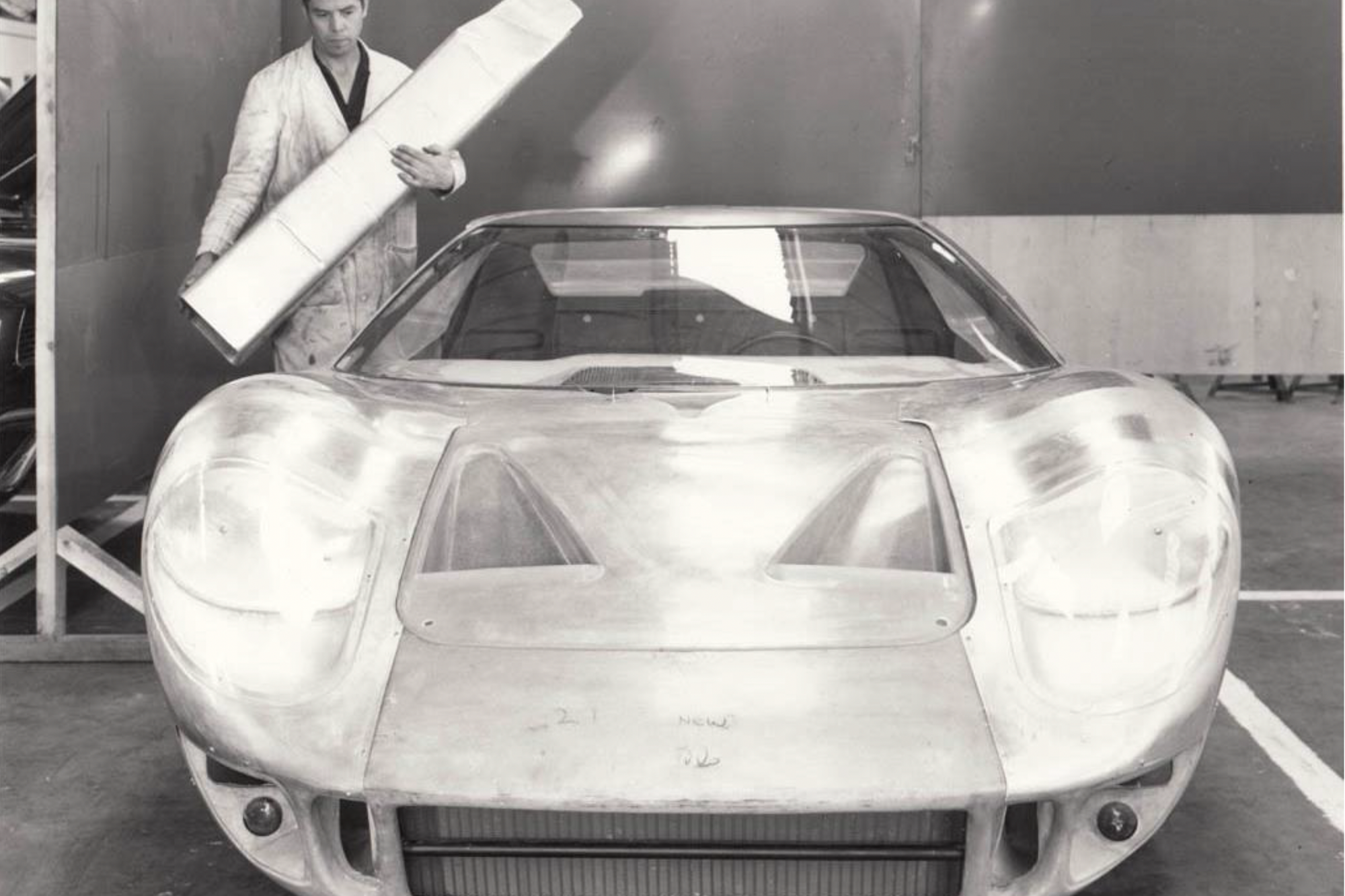
Almost an entire year before being shown to the public, this GT40 MK III prototype was photographed at FAV in Slough, at this stage, as a RHD GT40 chassis but with LHD driving set up in standard MK I body trim but with aluminium overlays of the proposed MK III body modifications. Development on the MK III in the FAV workshop continued for months alongside busy preparation of private cars for Le Mans and was eventually completed in August 1966 just after the marque’s inaugural Le Mans win. Following completion, XP 130/01 was shipped out to Ford Division in Dearborn Michigan. A photoshoot was carried out on the 3rd of October at Ford’s Romeo Proving Ground that would be used later in many promotional articles.
The new GT40 MK III model was unveiled in November of 1966 with XP 130/01 on a tour of the Texas Neiman Marcus stores. Local Newspaper the Fort Worth Star Telegram noted that customers could see the MK III in the Dallas store, Fort Worth Suburban store and in the downtown Houston store. The Texas-founded department chain would go on to showcase a number of other GT40s including P1018, before offering “his and hers” Thunderbirds in the 1970s and later, special editions and OEM partnerships through their famously outrageous Christmas Book.
Ahead of XP 130/01’s New York Motor Show appearance in April, it was placed in the care of Bill Kolb Jnr. whose Gotham Ford Inc. in New York was one of the Ford dealerships earmarked for the distribution of the MK III. Whilst in Kolb’s care, XP 130/01 was lent to various press organisations including Car and Driver, American Rodding, Motor, and Hi-Performance Cars, the latter of which featured the “dynamic young high- performance sales specialist.” At some point between between the date of the press loans and April, XP 130/01 was resprayed dark green and adorned with sill lines. It is in this striking combination that she was displayed at the New York Motor Show, despite the articles, published after the show, showing the original plain blue colour.
XP 130/01 continued to be used for promotional work until early 1968 when it was shipped back to John Willlment Automobiles (now in charge of the factory) to be rebuilt to full production Mark III specification. The letter on 02.05.1968 from Len
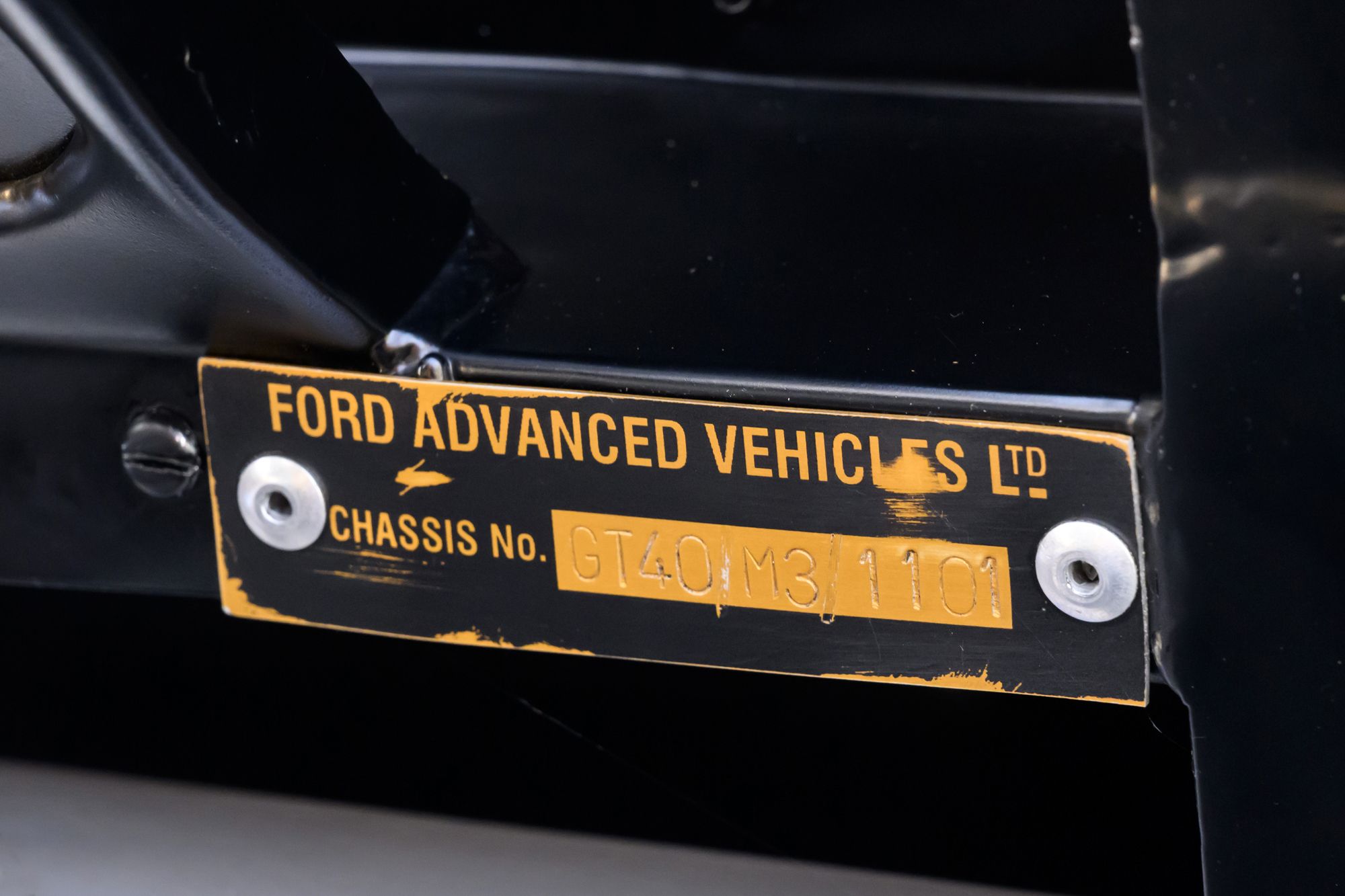
Pounds to John Wyer outlines the updates on the seven Mark IIIs and is the first reference of XP 130/01 as chassis 1101. 1101’s description is as follows - “Already owned by Ford U.S. JWA will complete updating, paint car bright red and ship to Dearborn by sea freight.” Another later letter from Pounds to Wyer on 24.06.1968 provided a further information on engine allocations for the seven cars and saw the 289
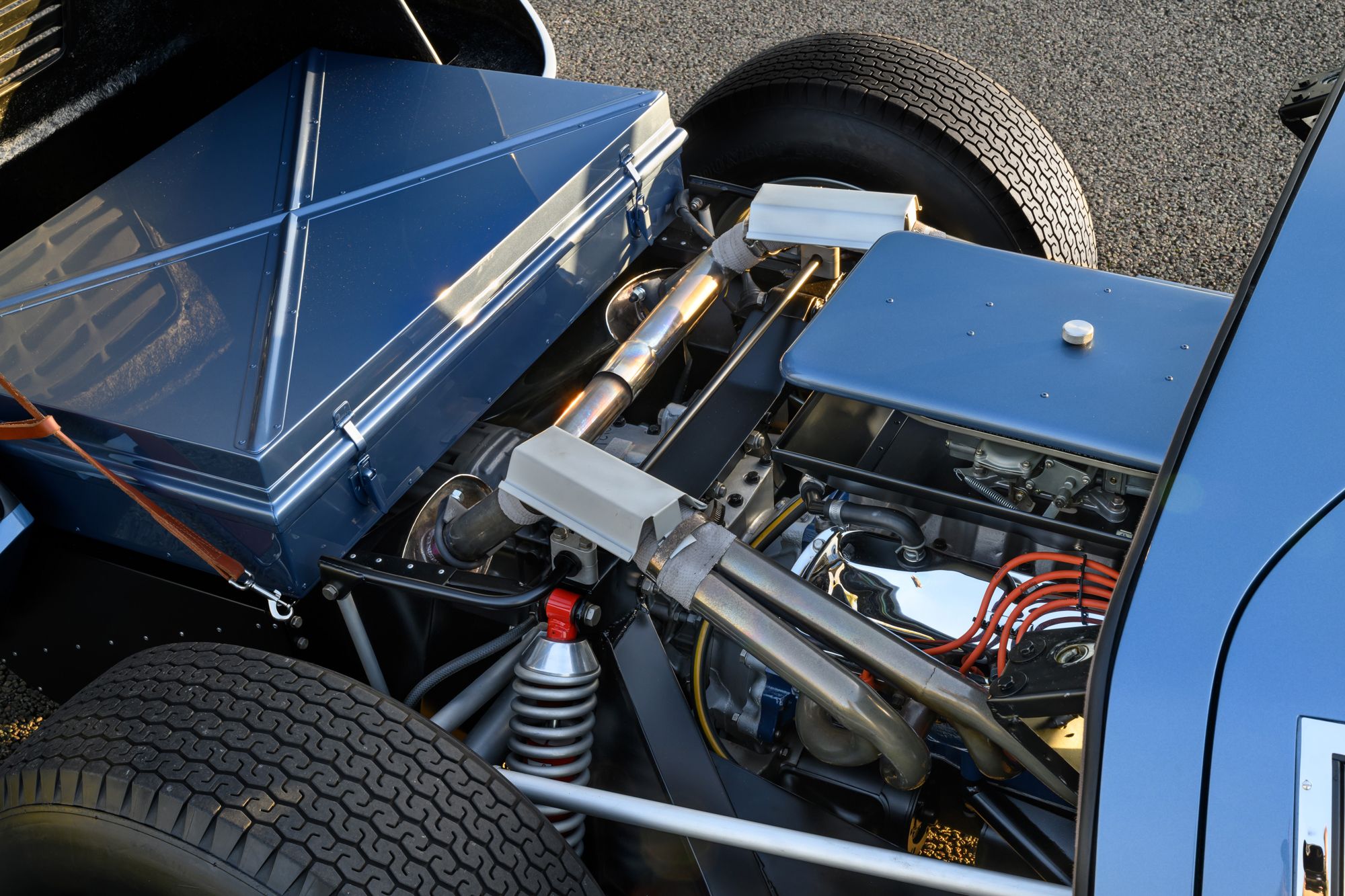
(SGT/9) originally in this car reassigned to M3/1105. Pounds wrote: “We did not refer to it on the telephone but it looks as though the above arrangements will leave the L.H. prototype without an engine. If so, I assume you will fit the 302 CID 230 HP engine in it.”
En route to Dearborn, M3/1106 was stored above M3/1101 in the sea freight container. 1106 somehow dropped down onto the car below, damaging the roof of M3/1101. Both cars were taken to Ford’s neighbouring Special Poject’s Partner Kar Kraft for damage assessment. M3/1106, pretty much unscathed, had minor repairs and was delivered to Ford, but M3/1101 needed a new roof structure. The parts were ordered and delivered, but at the time, the repair was not undertaken and 1101 was put in storage at Kar Kraft. A letter from the 1st of July 1970 between Ford’s Jacque Passino and Roy Lunn at Kar Kraft confirmed the official sale of the damaged M3/1101 to Kar Kraft.
In 1973, a customer was finally found and the long postponed rebuild was underway at KK as a condition of sale. M3/1101 was finished in BRG with black leather trim, and fitted with a 289 engine at a cost of $14,000, only for the customer to default. By April, 1974 the sale of M3/1101 was passed to to Algar Enterprises in Paoli Pennsylvania and advertised in the April 13th edition of Auto Trade. Thus, M3/1101 found her first private buyer, Seward Prosser Mellon of the ‘Gulf Oil’ family, although by his own admission, he used the car very little.
In November of 1976, M3/1101 was consigned to Ed Jurist’s Vintage Car Store in Nyack, New York and listed at $55,000. By the end of the year there was a potential customer on the car but his letter stated that he found the asking price to be too high and offered $25-35,000. At the start of 1977, Jurist reassured Mellon that they were still working hard to sell the GT40 and set about reaching out to Kar Kraft and Al Garthwaite to confirm the 678 miles shown on the odometer. Correspondence confirmed that the reading was correct, having been reset at the time of the roof repair. M3/1101 was sold to Ralph Brass of Fairfield, New Jersey for $35,000 in February 1978.
In 1990, Brass returned M3/1101 to Vintage Car Store to be sold again. In 12 years of ownership, Brass had only put 151.1 miles on the odometer and never bothered to register it. Expert Ronnie Spain corresponded with VCS regarding the condition of and remarkably low mileage shown on M3/1101. Much of their discussion centred around the well-worn interior which didn’t make sense with such low mileage. Recent discussion with Ronnie confirms that the interior at this time would have still been the original from its prototype development days.
In 2005, M3/1101 was purchased by Christian Gläsel of Tübingen Germany. Christian’s father Peter was already the owner of P/1023 and inspired by him, Christian set out to find his ultimate race car - a RHD MK I GT40. It might seem strange then, that he bought M3/1101, a LHD, extremely low mileage road car, but as it had been a RHD MK I in its prototype form, Christian may have believed that returning it this specification was possible.M3/1101 was thus sent to Paul Lanzante in Surrey England for transformation into a RHD MK I race car.
During the restoration, all parts, primarily bodywork, which could not be re-used in the rebuilt race version of 1101 were carefully preserved. A major part of the transformation was the incorporation for the first time of the central tunnel for the water pipes as the MK III had them routed along the sides. Shortly after completion, Christian’s father Peter passed away and Christian inherited GT40 P/1023. M3/1101 was thus surplus and offered for sale without ever having been driven.
In 2009, P/1101 was traded by Pearman for a collection of Jim Clark cars and acquired by J.D. Classics. Whilst at J.D. P/1101 was advertised as UK registered with full FIA HTP papers. J.D. made full use of those papers racing P/1101 with Chris and Alex Buncombe, Gary Pearson, and Andy Wallace. After the Bernina Gran Tourismo in 2015, P/1101 was acquired by current owner Kurt Englehorn.
Once in his care, Kurt Englehorn, on the inspired suggestion of advisor Florian Seidl, embarked on the scholastic restoration of P/1101, not just to M3/1101 specification but back to original, LHD prototype “XP 130/01” specification, complete with the 302 that was fitted when she became a production MK III. The restoration was undertaken with the advice and guidance of marque expert Ronnie Spain who documented the process in his report noting many of the surviving one-off prototype details that would only be on this particular car, including the instantly recognisable rounded windows that it lost in 1968.
M3/1101 was completed on the 12th of August 2016 just in the nick of time for the upcoming Concours d’Elegance. Promptly photographed and loaded onto a plane bound for Monterey. Nine days later, she was on the hallowed lawn of Pebble Beach alongside 16 other esteemed GT40s to celebrate 50 years since the 1966 Le Mans win. 1st in class went to the 1966 Le Mans winner, 2nd went to an extremely rare GT40 roadster, and this, the first MK III prototype recently returned to her original glory, came 3rd.
Upon returning from America, M3/1101 was displayed at Retromobile and Salon Prive where it won car of the week. M3/1101 then enjoyed some light competition at the St. Moritz Kilometre Lance and again at the Bernina Grand Turismo.
Ford’s rarest production car ever, the MK III was the Le Mans car Ford’s wealthiest customers could daily. As the only LHD prototype, M3/1101 has an immutable place in Ford’s history and plays a key role in the development of the supercar.
 UK
UK
UK
UK

Fiskens, 14 Queens Gate Place Mews, London, SW7 5BQ
|
Phone: +44 (0)20 7584 3503
© 2026 FISKENS Ltd. Registered Company Number: 3382047
Terms of Use | Privacy and Cookies Policy Site by racecar