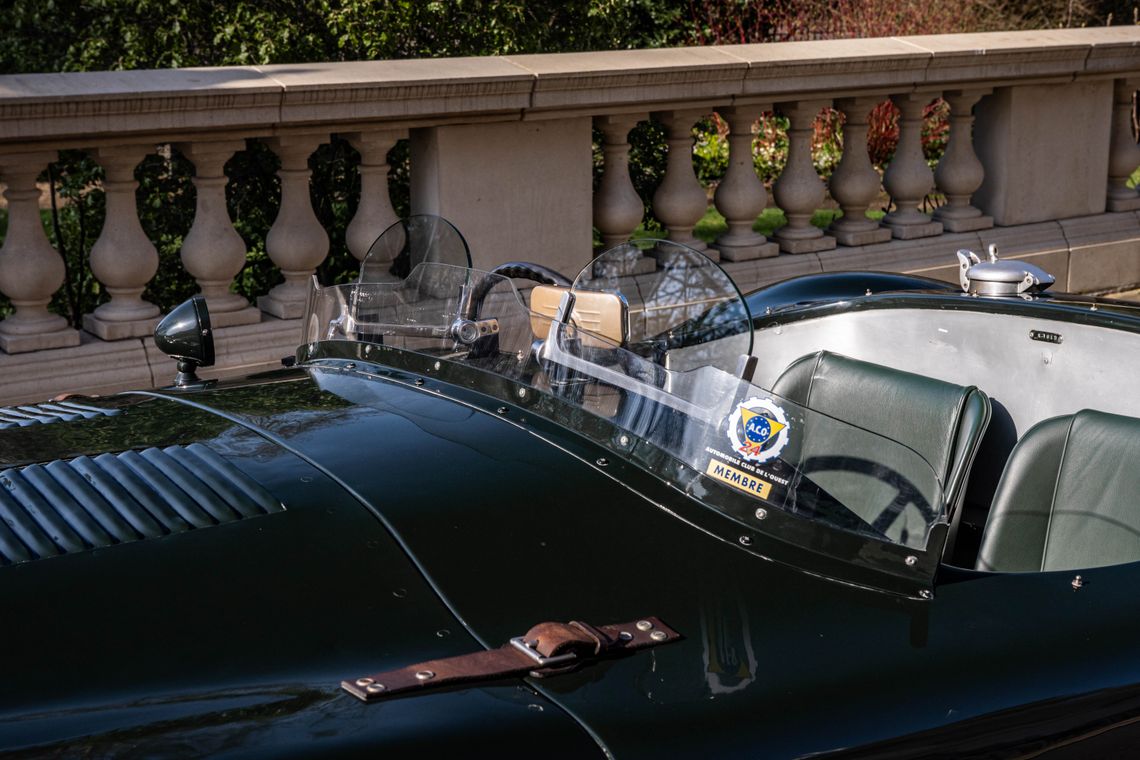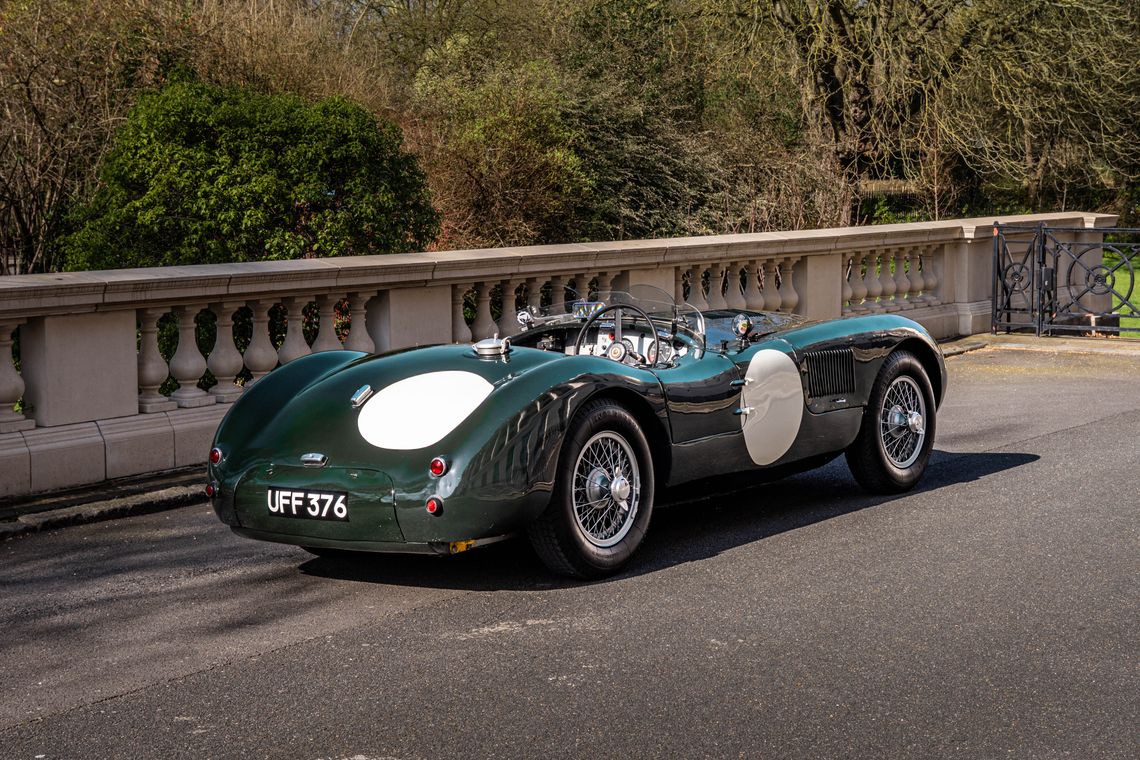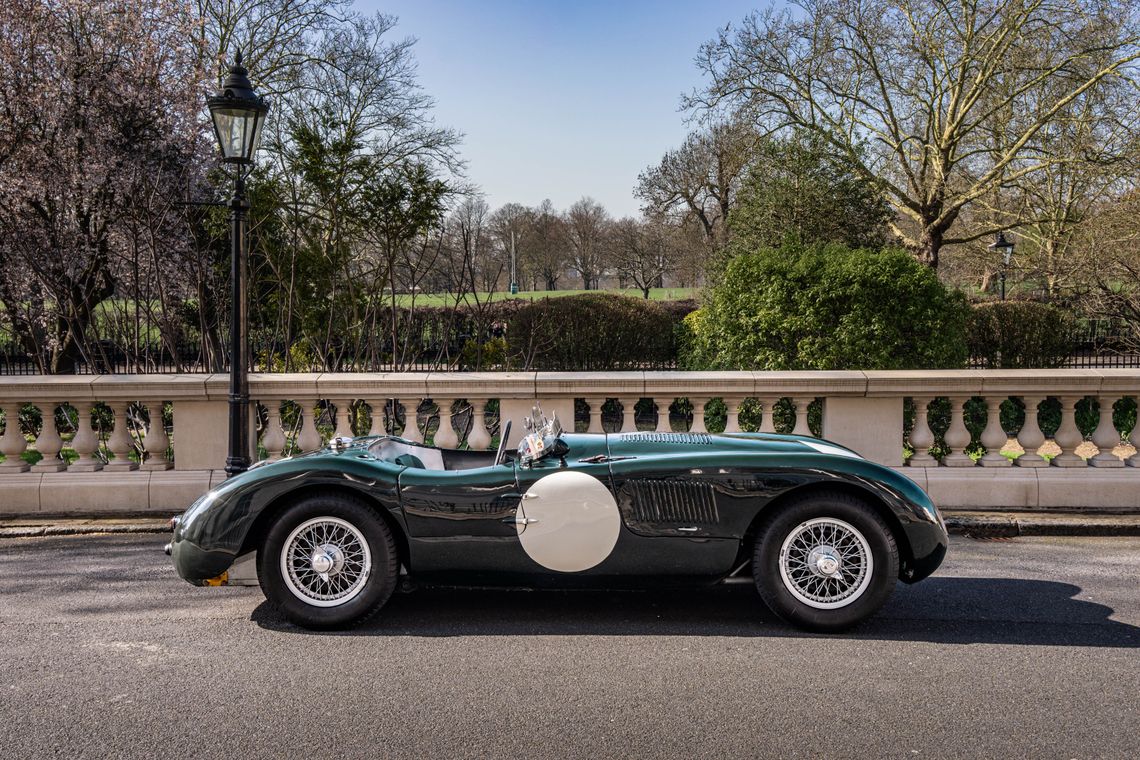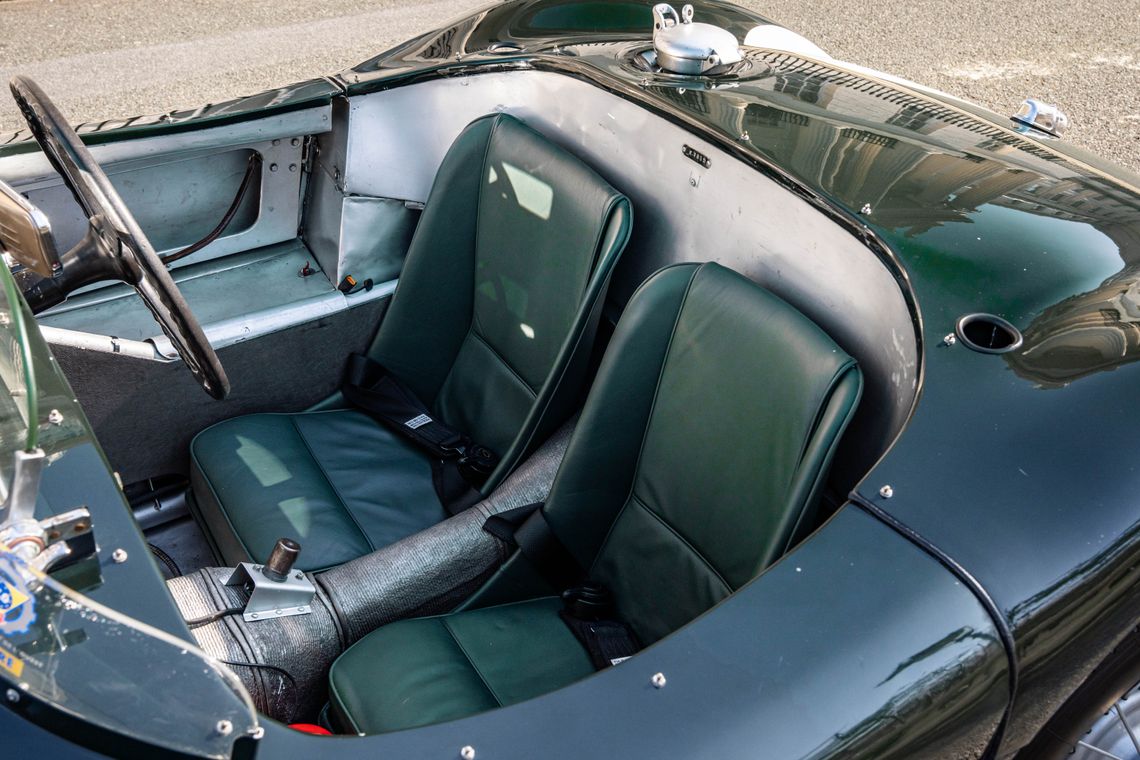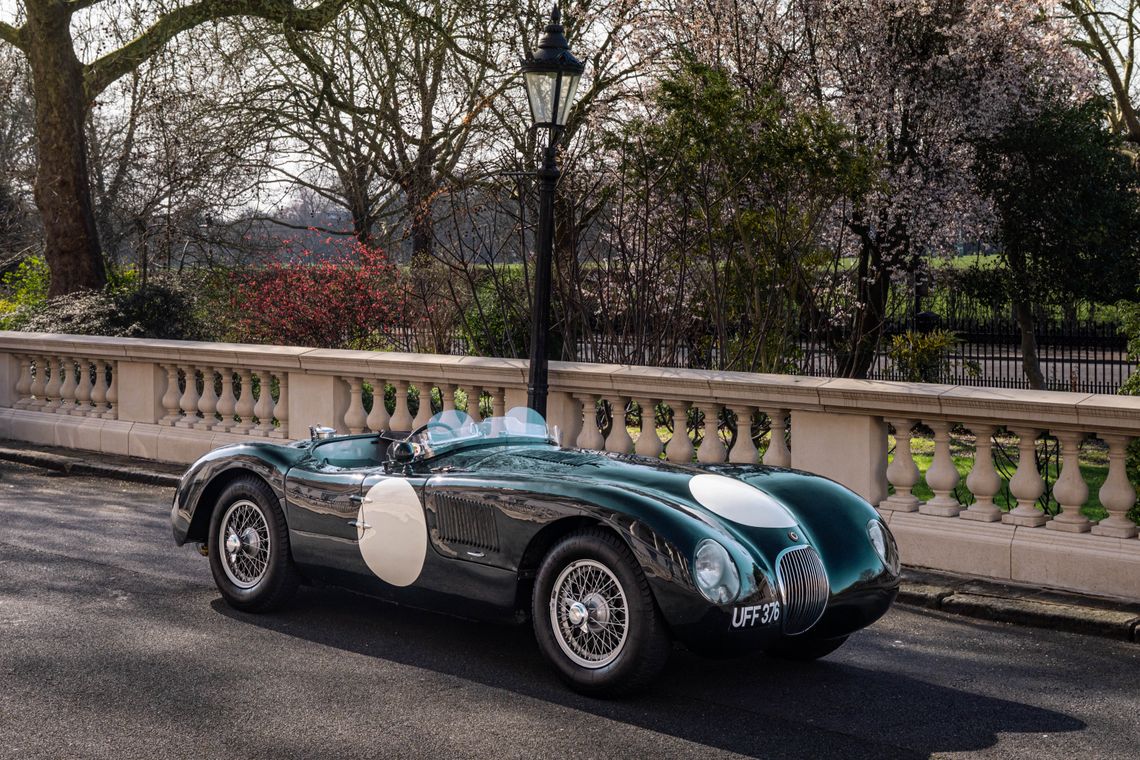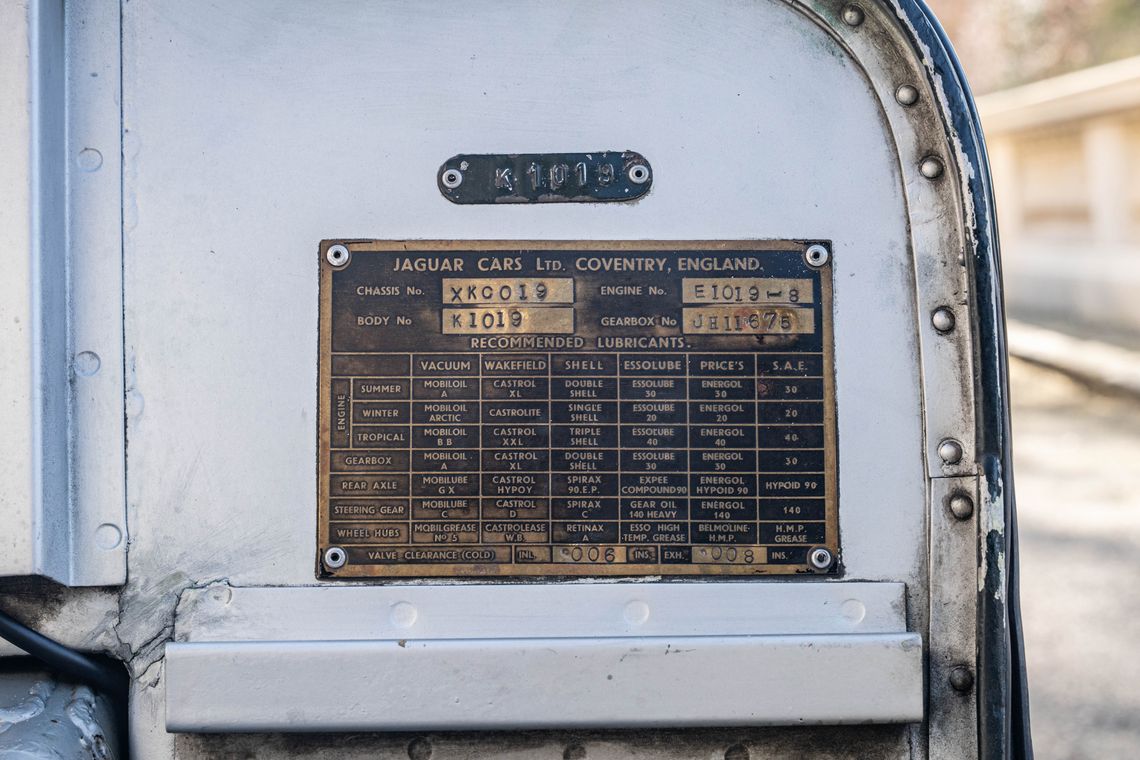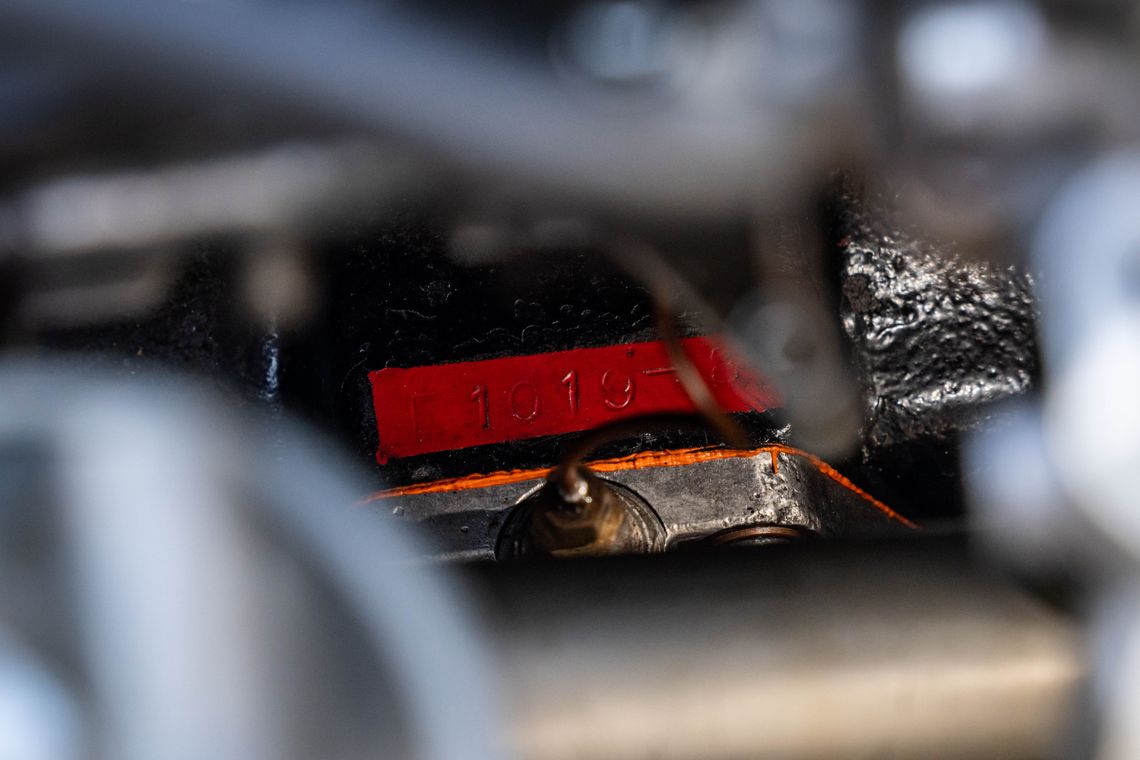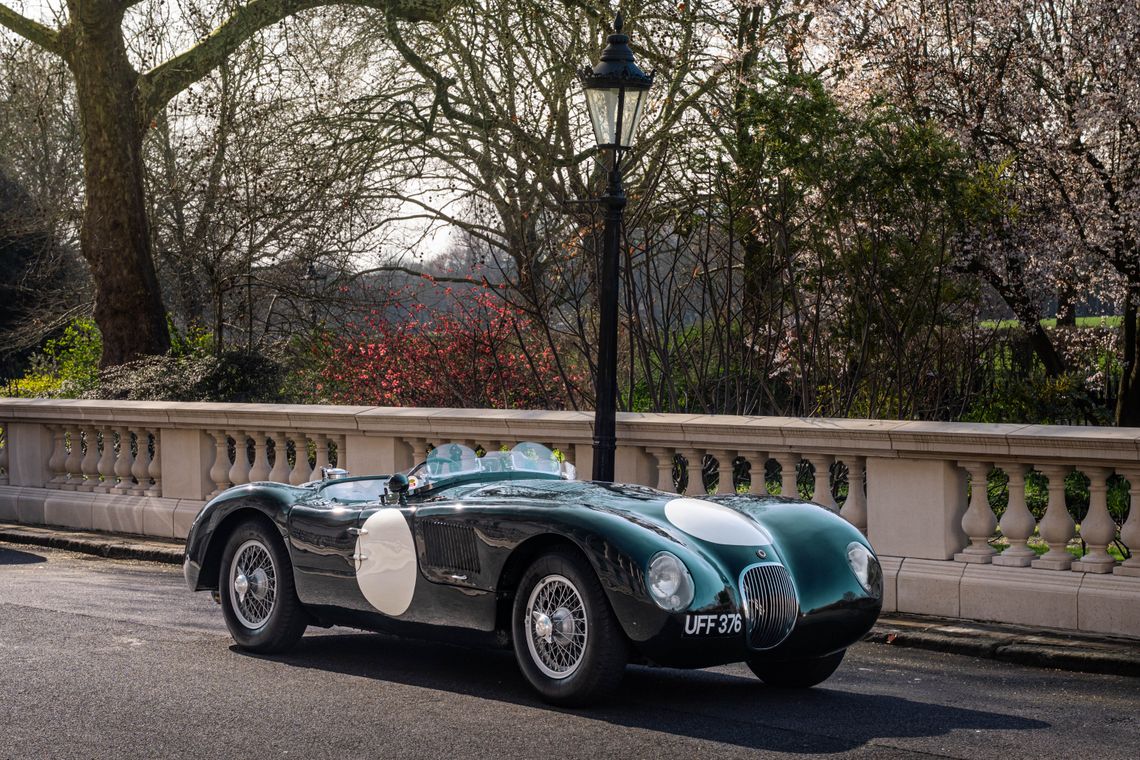
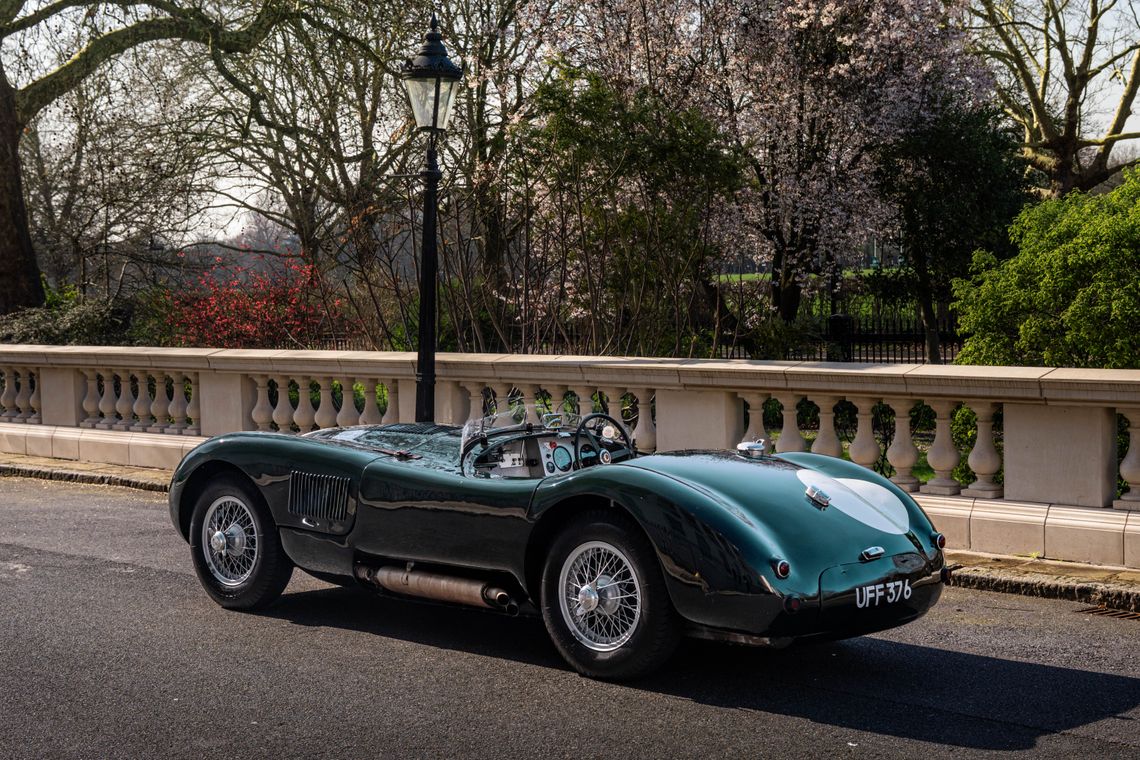

1952 Jaguar C-Type, Chassis XKC 019
Jaguar’s XK120 not only won worldwide acclaim through its successes on the gruelling long-distance Alpine and Tulip rallies, but was unquestionably the most beautiful car to emerge from the immediate post-World War II era. Yet, while the likes of Stirling Moss was able to use it to great effect at the 1951 Tourist Trophy, its luxuriant weight hampered the XK’s chances on closed circuit racing.
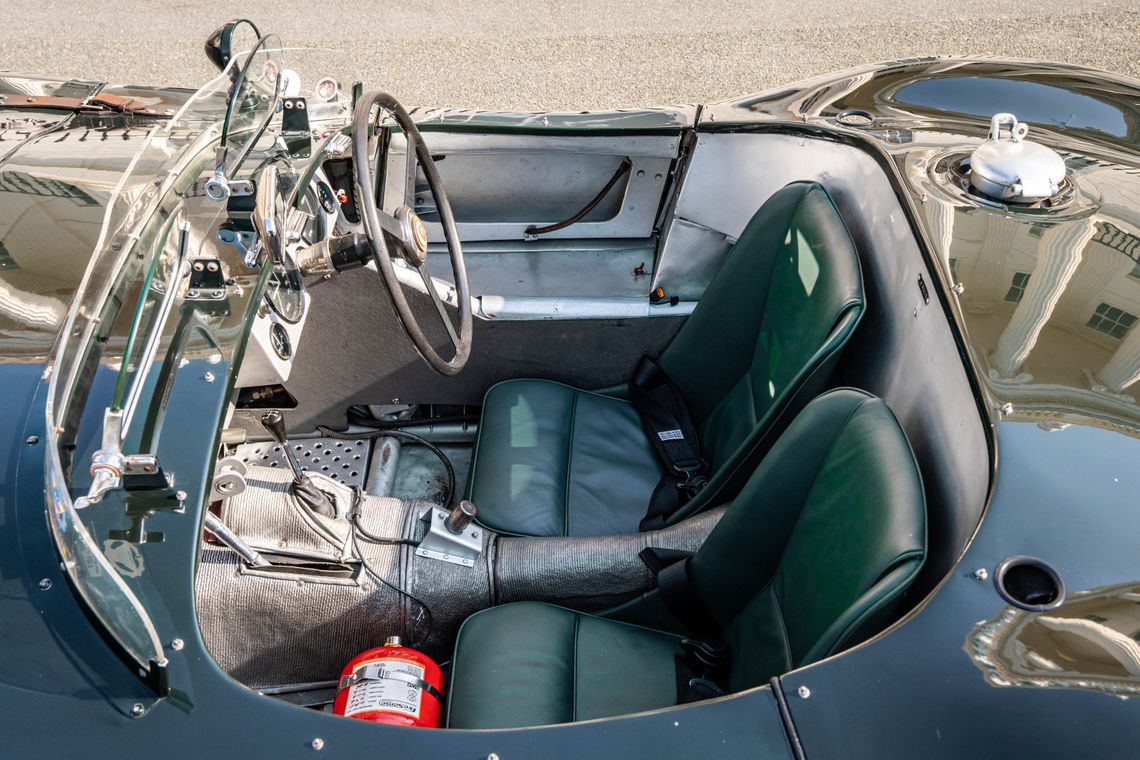
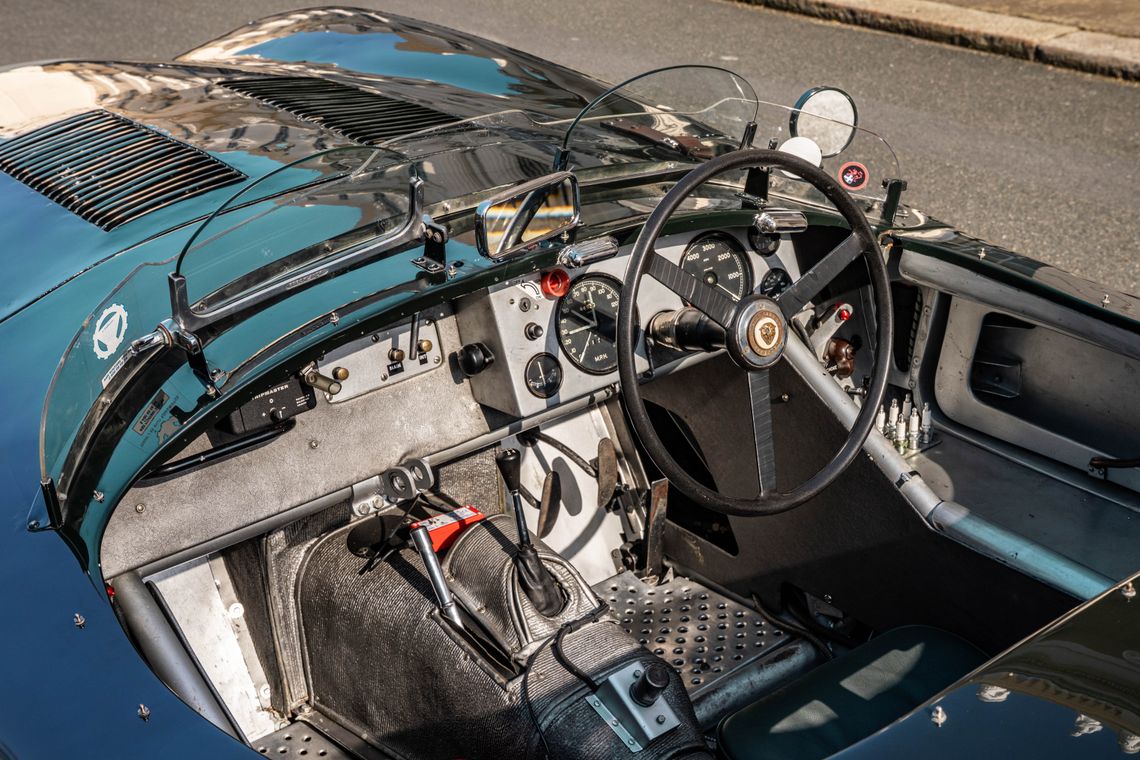
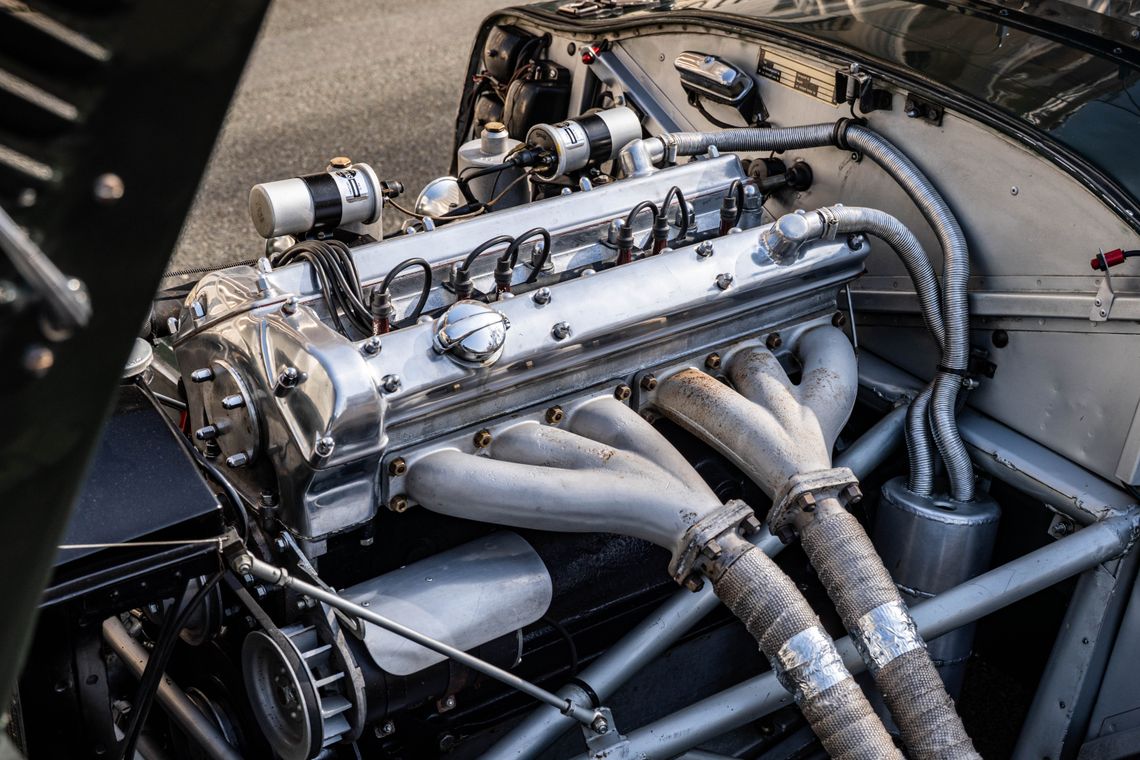
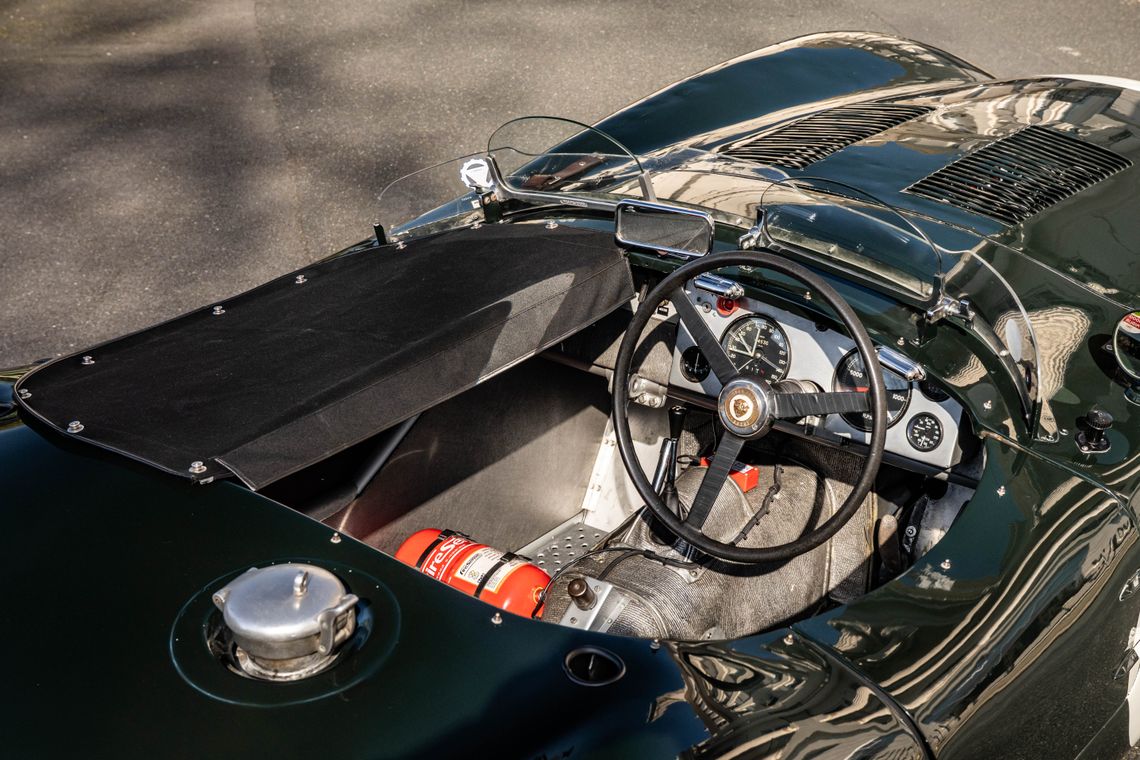
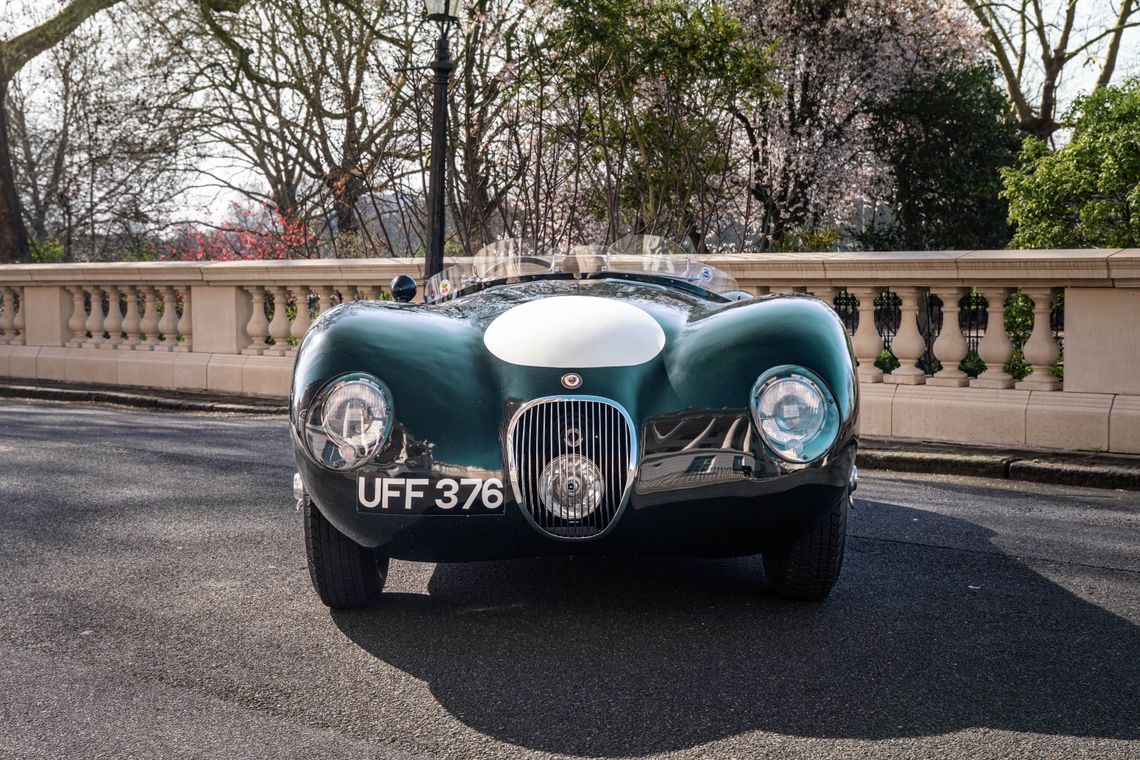
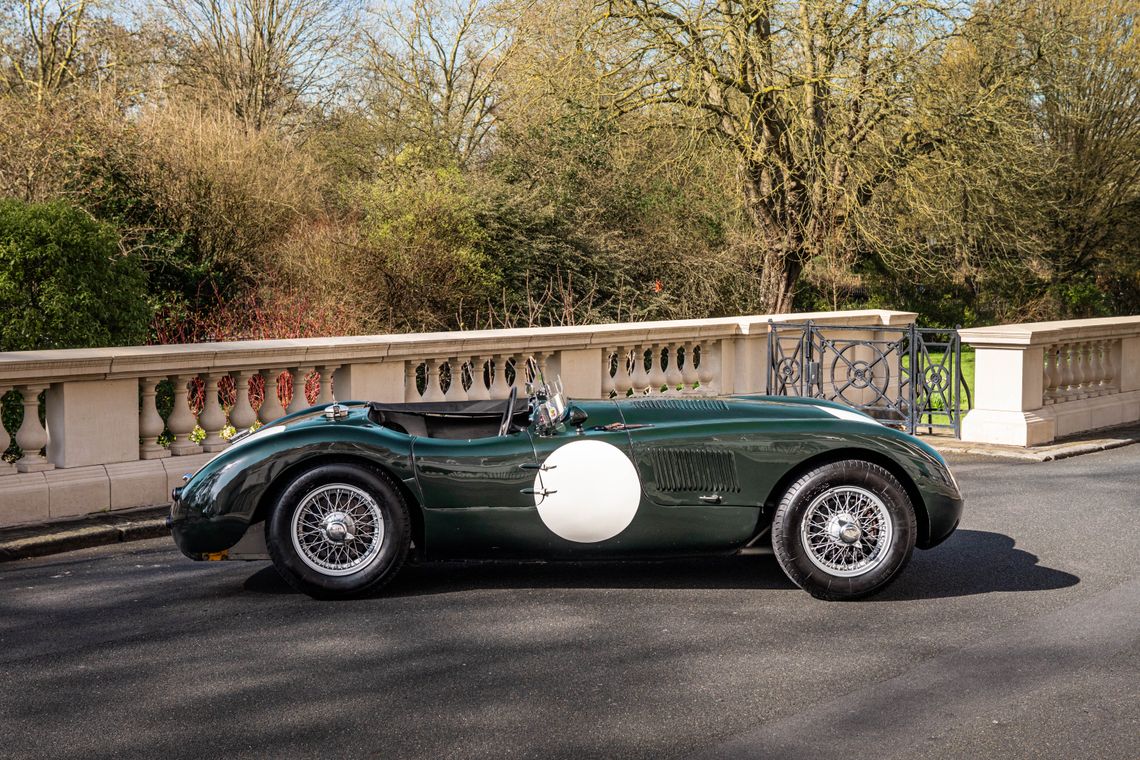
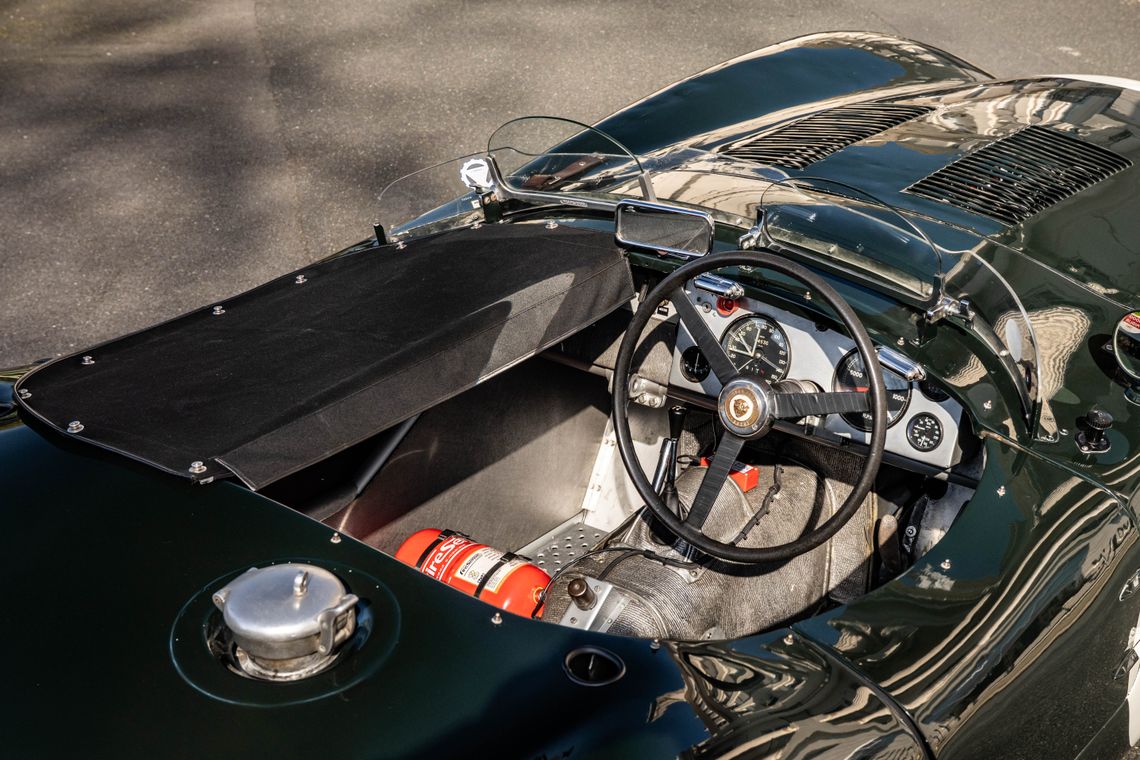
In complete secrecy, Jaguar developed the answer in the form of their first purpose built racing car: the XKC or C-Type. It shared the XK120’s 3.4-litre XK-straight six engine but little else, and even that was reworked for more power. An aluminium spaceframe chassis supported both a slippery aerodynamic body and new independent rear suspension set up. Lower, stiffer, lighter and with more grunt, the C-Type was an immediate success and won its first race: none other than the 1951 Le Mans 24 Hours.
Throughout the early and mid-1950s, C-Types became global ambassadors for Jaguar and Britain, contesting all of the major international races and winning many of them. For the budding Gentlemen Driver, there was no better tool.
This C-Type, chassis XKC 019, was sold new to one such aspiring enthusiast: Herman Roosdorp. A garage owner from Antwerp, Belgium, cars were a business as well as a hobby for Roosdorp and his enterprise enabled him to go motor racing with this top-flight sports racing car. Jaguar factory records show that XKC019 was dispatched from Coventry on 24th October 1952, as one of just six C-Types out of the 53 built to be painted silver.
Roosdorp would race the Jaguar periodically and cherrypicked some of the period’s greatest international meetings to enter. His best result was 3rd place at the 1953 Spa-Francorchamps 24 Hours. He and co-drivedUlmen hoped for a repeat performance four weeks later at the Nurburgring 1000 Kms, but would retire with accident damage. Clearly not severe damage however, as the C-Type was in action just a few weeks later at the Jabbeke speed trials and recorded a top speed of 234kph (145.4mph).
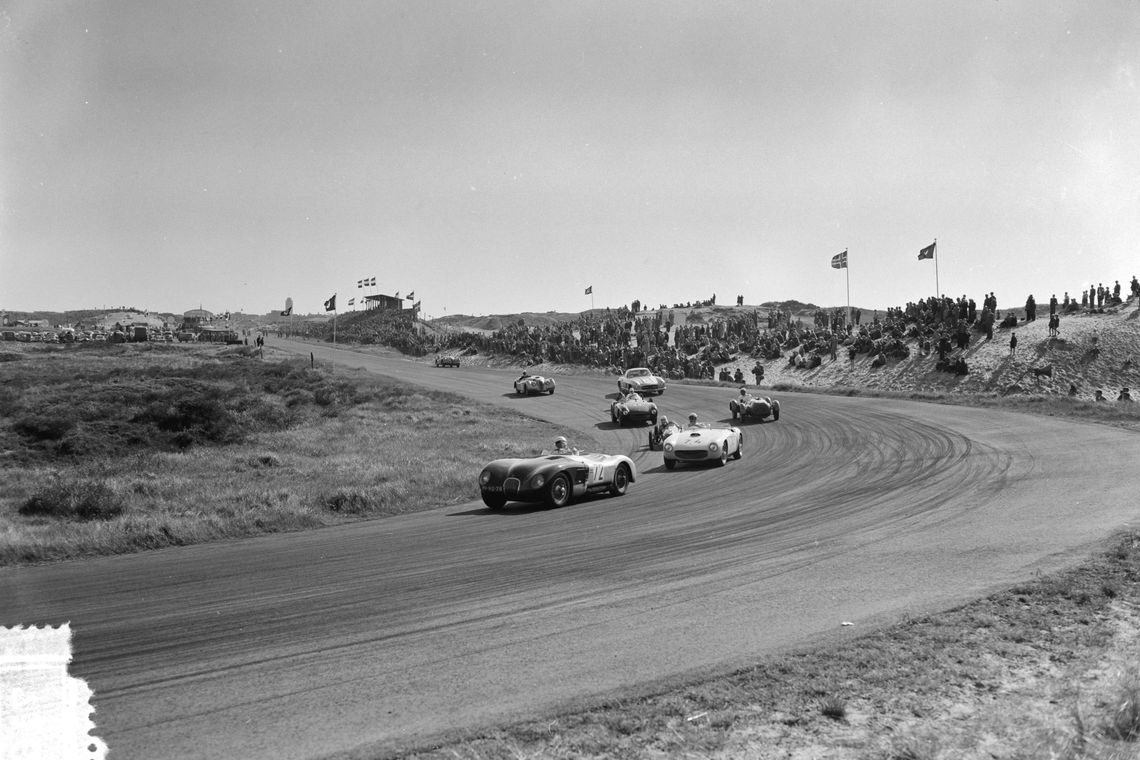
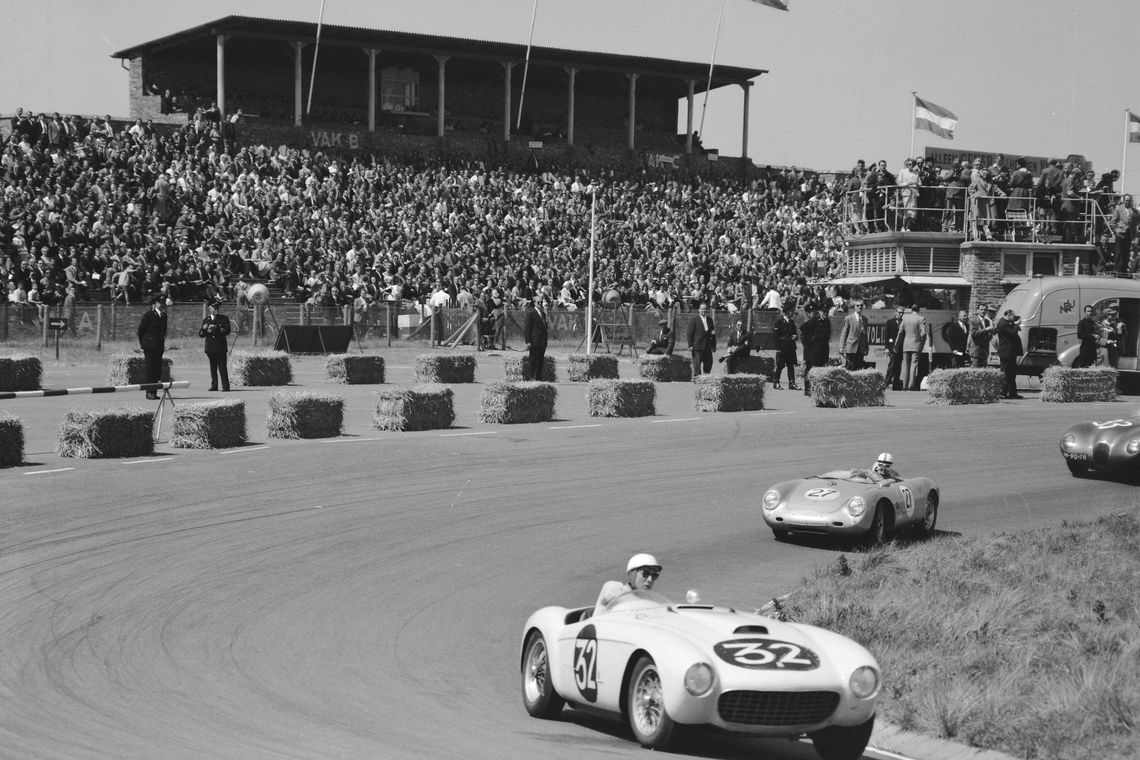
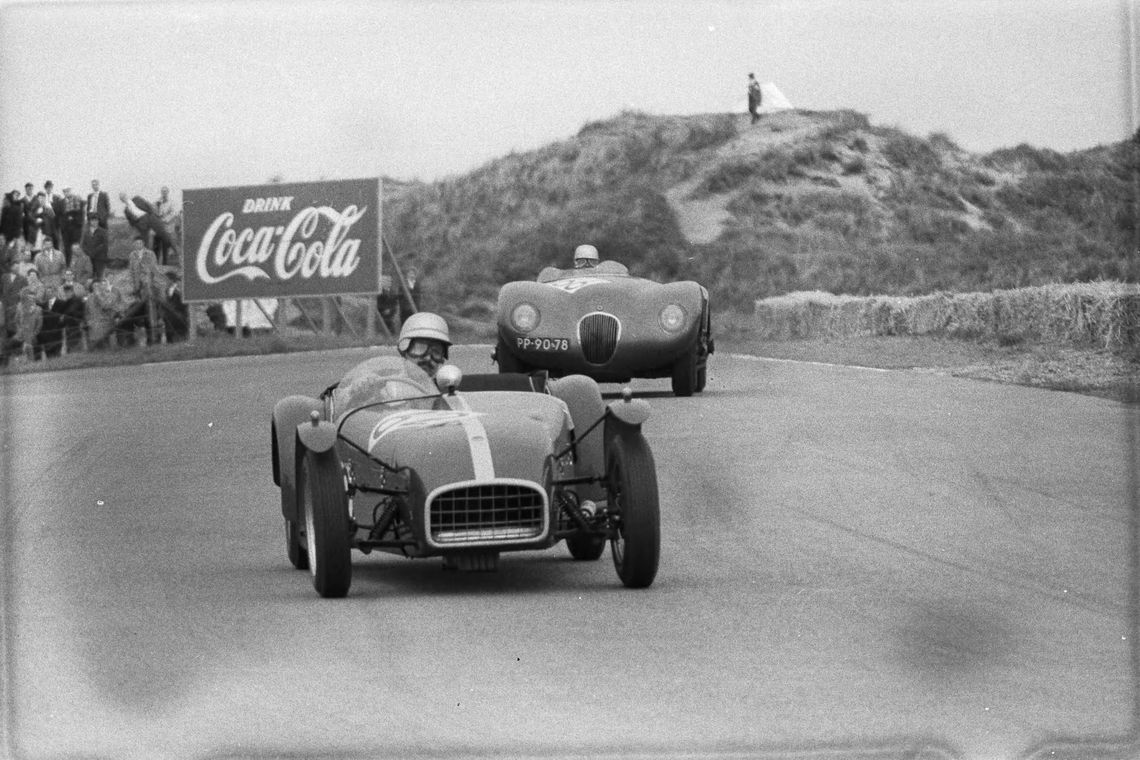
Into the late 1950s the C-Type passed through the hands of Hans Maasland, the Dutch Maserati importer, and continued racing in Holland at circuits such as Zandvoort. By the mid-1960s the car had been colour changed to white and then British Racing Green, and was photographed at that time with a distinctive full windscreen. A transatlantic voyage took XKC 019 to the USA where, in December 1967, it was for sale with New York dealer Herb Wetson.
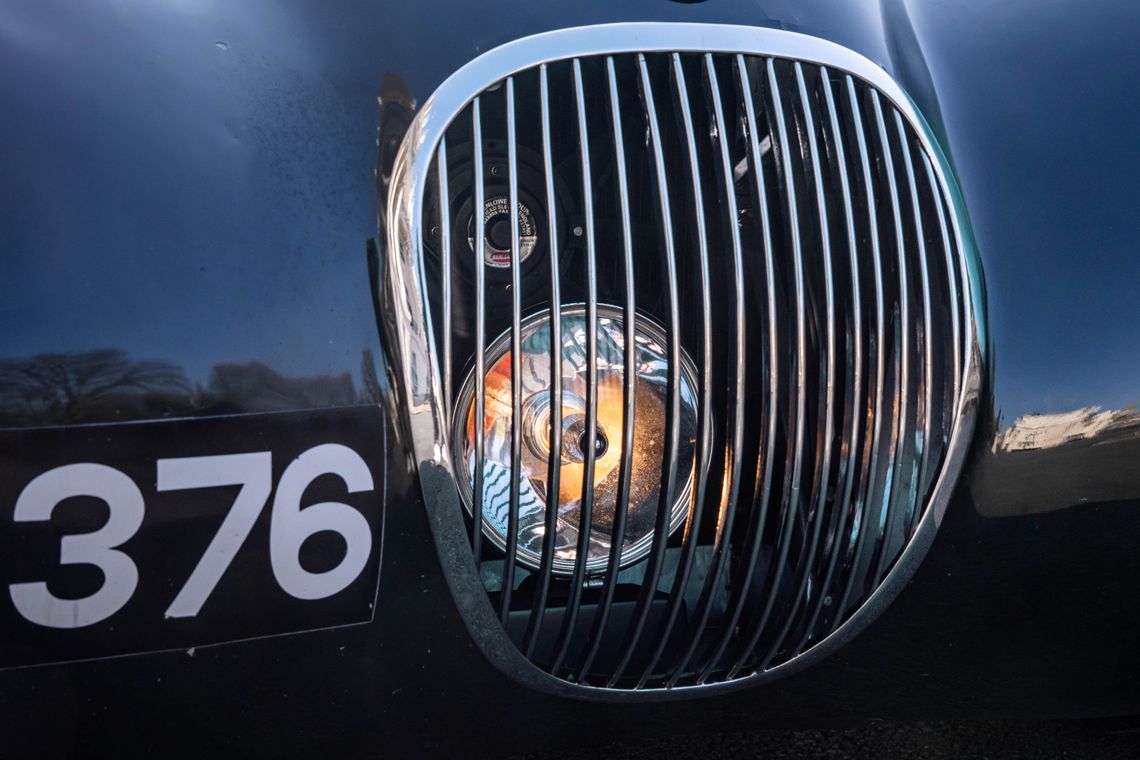
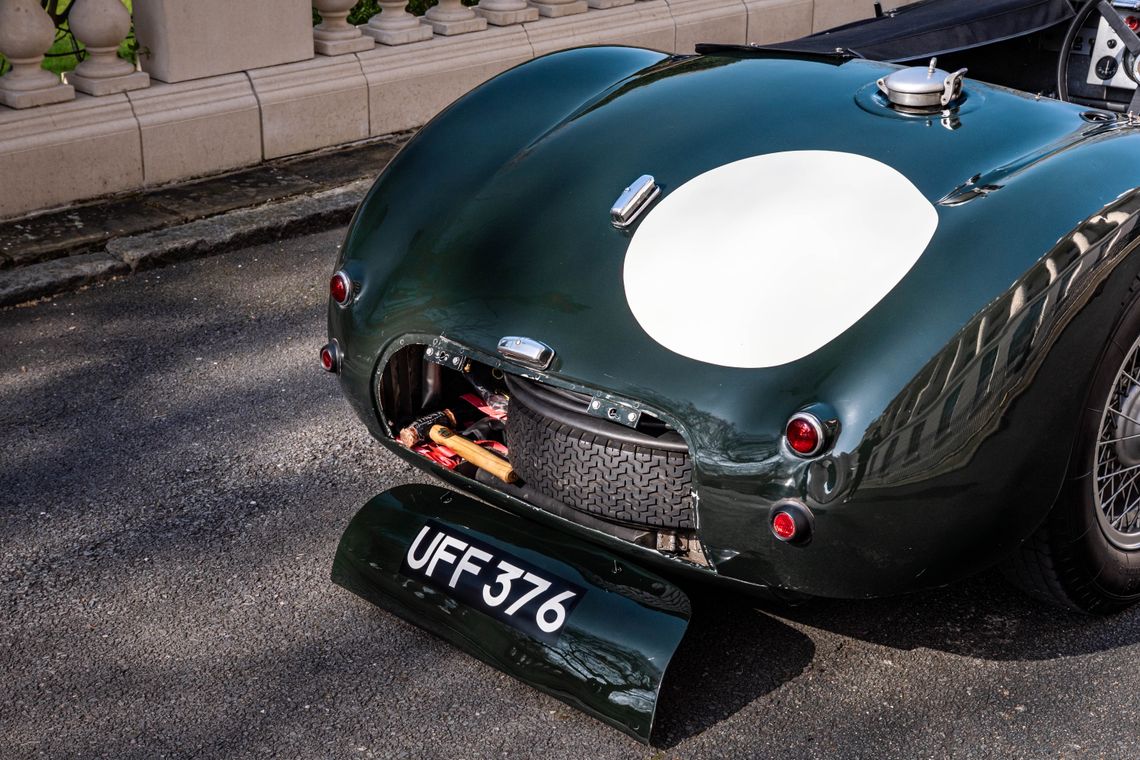
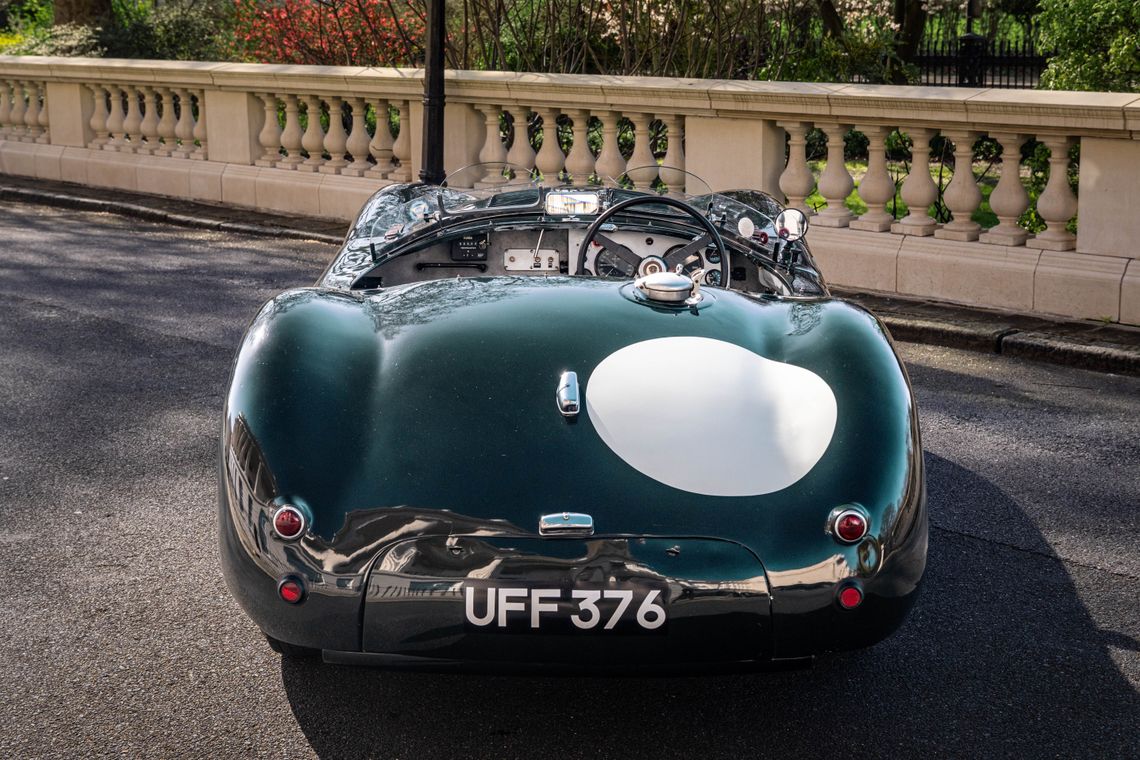
A year later the C-Type was in Pennsylvania, owned by a Mr. Preston Smith, but returned to Europe in 1984 and passed between a small number of owners in Germany before joining the stable of British collector Hugh Taylor in 1993. Hugh Palmer became its next custodian in 1995 and registered it in the UK on the number UFF 376, before entering several editions of the Mille Miglia Storica; a tradition kept by its next two owners.
The current owner acquired XKC 019 from Fiskens in September 2007 and we are honoured to be entrusted to find her a perfect new home almost 20 years later.
Known Race List:
Herman Roosdorp and Toni Ulman
25-26th July 1953 - Spa-Francorchamps 24-Hour - #18 - 3rd O.A.
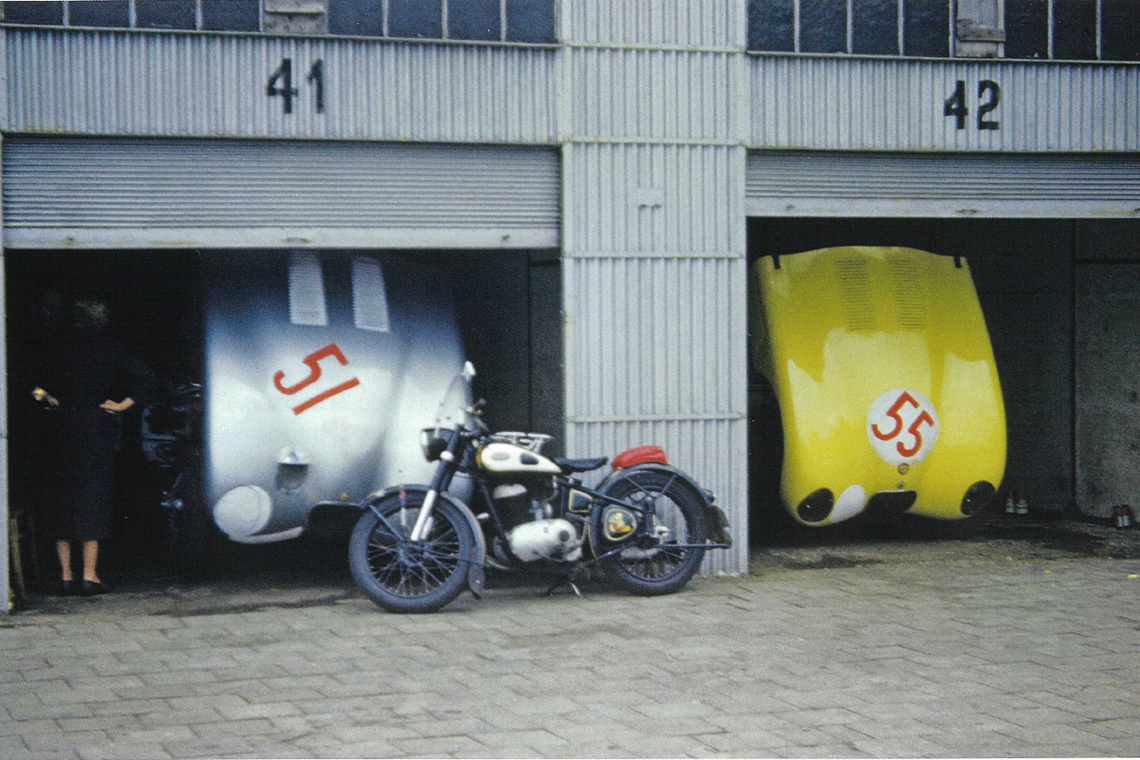
30th August 1953 - Nurburgring 1000Kms - #51 - retired
September 1953 - Jabbeke Speed Trials - 243 kph
Johannes (Hans) van Dieten
23rd May 1954 - Grand Prix de Spa - 5th O.A. 3rd I.C.
7th June 1954 - Autoraces Dutch GP Zandvoort - #75 - 2nd
25th July 1954 - National Zandvoort - #81 - 2nd
15th August 1954 - Zandvoort International - #63 - 4th I.C.
8th May 1955 - Grand Prix de Spa - #29 - DNA
29th May 1955 - National Zandvoort - #72
9th June 1957 - NAV National Sportwagen Races Zandvoort - #33
Hans Maasland
10th July 1960 - Zandvoort - #36